
www.medical-devices.tech
12
'26
Written on Modified on
Virtuoso Surgical secures FDA authorization for incision-free bladder robot
The nitinol-armed endoscopic system establishes a new regulatory category for endoluminal robotic surgery and enables precise en bloc tumor resection.
virtuososurgical.net
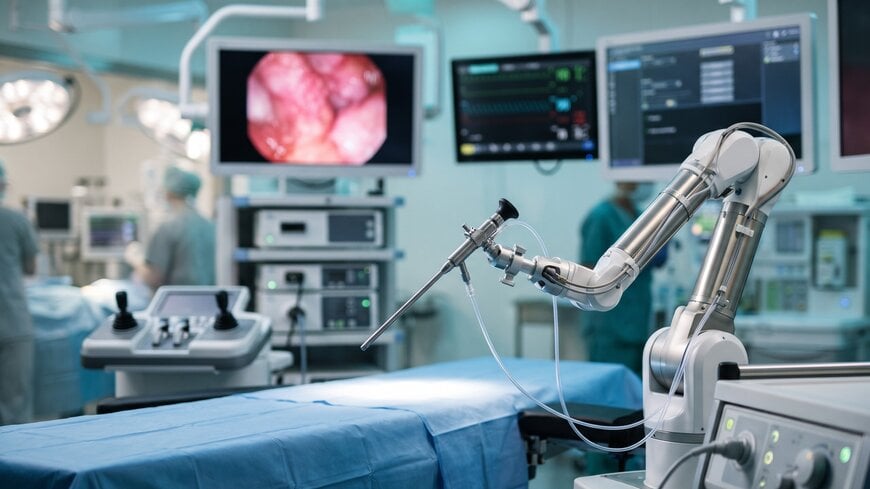
Virtuoso Surgical has received De Novo authorization from the US Food and Drug Administration (FDA) for its Virtuoso Endoscopy System, a pioneering robotic platform designed to remove bladder lesions entirely through the urethra without external incisions. Granted on October 30 and announced in November 2026, this approval establishes a brand-new FDA classification: electromechanical surgical systems for endoluminal procedures. Developed by researchers from Vanderbilt University and Johns Hopkins University, the Nashville-based startup's technology aims to revolutionize how urologic cancers are excised and staged.
Enhancing pathology through en bloc resection
Historically, bladder cancer is diagnosed and staged using transurethral resection of bladder tumor (TURBT), a conventional method where a surgeon utilizes a wire loop to cut away the tumor in fragments. Fragmented tissue complicates pathological analysis, particularly in determining whether the cancer has invaded the detrusor muscle (the muscular layer of the bladder wall). Under-staging early-stage disease often necessitates secondary surgeries and increases the risk of recurrence.
The Virtuoso system solves this by equipping a standard endoscope with two highly dexterous, needle-sized robotic arms, allowing the surgeon to perform an en bloc resection—removing the lesion in a single, intact piece. This preserves the tumor's structural margins and depth of invasion for precise pathological staging. In the company’s VIABLE study, conducted at The Chinese University of Hong Kong, 94% of lesions removed with the system contained the critical detrusor muscle, well above the 60% performance goal and the ~70% median associated with conventional TURBT.
A new classification for endoluminal robotics
Because the Virtuoso system operates entirely through the body's natural orifices rather than through percutaneous incisions (laparoscopy), it required a novel regulatory pathway. Having previously earned FDA Breakthrough Device designation, its De Novo clearance paves the way for future endoluminal robots to use it as a predicate device. Backed by NIH grants and over $15 million in private funding, Virtuoso Surgical plans a targeted US commercial launch at leading urology centers in 2027, while concurrently conducting investigational feasibility studies for gynecological, pulmonary, and neurosurgical applications.
Additional Context
This section details the biomechanical engineering and solid-state physics of the robotic arms not included in the original press release.
Scaling down a robotic arm to pass through the millimeter-scale working channel of a standard endoscope makes traditional robotic architectures impossible. Conventional surgical robots (like the da Vinci system) rely on rigid links connected by discrete mechanical joints, articulated via complex micro-cables and pulleys. At the scale of a needle, cables snap or suffer from excessive friction, and joints become impossible to manufacture reliably.
Virtuoso Surgical circumvents this by utilizing Concentric Tube Robotics, a form of continuum robotics. Instead of joints and cables, each robotic arm is constructed from a series of pre-curved, nested tubes made of Nitinol (a Nickel-Titanium shape-memory alloy). Nitinol possesses a unique metallurgical property known as superelasticity; it can undergo massive physical deformation (up to 8% strain) by temporarily shifting its crystal lattice from an austenitic phase to a stress-induced martensitic phase, and then immediately recover its original shape without permanent damage.
When the nested tubes are pushed straight through the rigid endoscope shaft, they deform. As they exit the tip into the bladder cavity, they spring back to their pre-programmed curves. The robotic base, located outside the patient's body, controls the arm by simply rotating and translating (pushing/pulling) these nested tubes relative to one another. The elastic mechanical interaction between the overlapping curves dictates the exact trajectory and position of the end-effector (the surgical tool) in 3D space, providing surgeons with six degrees of freedom and unprecedented dexterity at a microscopic scale.
Edited by an industrial journalist, Lekshman Ramdas, with AI assistance.
www.virtuososurgical.com

