
www.medical-devices.tech
11
'26
Written on Modified on
ZEISS to expand myopia solutions in China
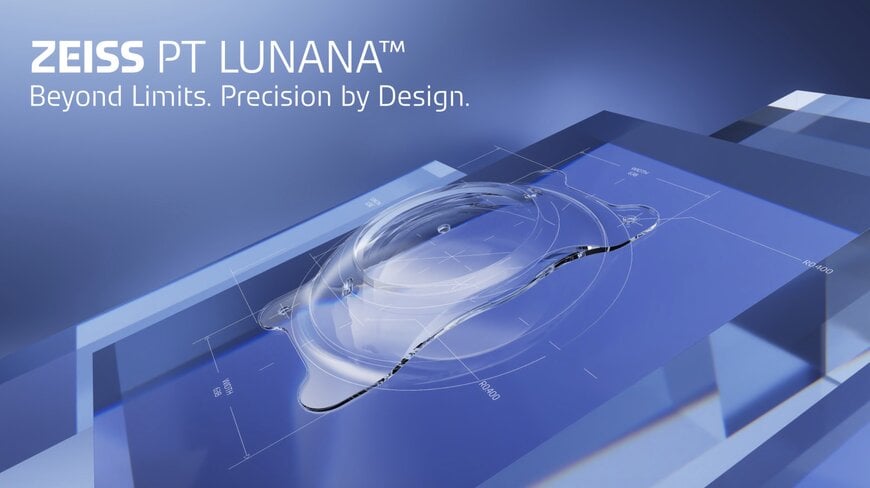
ZEISS Medical Technology showcased at CIIE its next-generation aspheric phakic intraocular lens (pIOL) PT LUNANA to address myopia in China.
www.zeiss.com
Public health frameworks in East Asia face severe clinical burdens stemming from the surging prevalence of high and pathological myopia among adolescent and young adult demographics. While corneal laser refractive procedures—such as small incision lenticule extraction and laser in situ keratomileusis—have historically dominated elective vision correction, their mechanical application is fundamentally constrained by corneal biomechanics. Patients exhibiting extreme refractive error, abnormal corneal curvature, or thin residual stromal beds face elevated risks of postoperative corneal ectasia if subjected to corneal tissue ablation. In these clinical cohorts, phakic intraocular lenses provide an effective reversible alternative by preserving natural crystalline lens accommodation and corneal integrity. However, global supply chains for posterior-chamber phakic implants have remained highly consolidated, leaving ophthalmic surgeons with limited implant form factors, narrow step increments, and constrained material selections. Expanding safe surgical correction across large myopic populations requires biocompatible posterior-chamber implants that combine customized aspheric optics, flexible polymers, and fine-increment sizing options to prevent vault-related complications.
Aspheric Optics and Hydrophilic Polymer Integration
To address surgical demand in China, ZEISS Medical Technology secured approval from the National Medical Products Administration for the PT LUNANA phakic intraocular lens. The device represents the foundational platform of the newly established ZEISS phakic IOL portfolio, combining the company's optical design heritage with regional clinical development and local manufacturing.
The PT LUNANA implant features a specialized aspheric optical design paired with AQUAFLEX hydrophilic polymer material, engineered to provide high optical clarity, flexible mechanical folding for micro-incision delivery, and positional stability within the posterior chamber. Designed to fit varied anterior segment anatomical dimensions, the lens portfolio includes an expanded array of sizing options and power steps. This fine-stepped range enables surgeons to treat moderate-to-high myopia and correct patients disqualified from corneal laser ablation due to insufficient corneal pachymetry. Publicly presented at the 9th China International Import Expo in Shanghai, the PT LUNANA platform completed pre-market multicenter clinical trials and two years of structured postoperative follow-up across nine Grade 3A tertiary hospitals in China.
Public Health Alignment and Refractive Portfolio Synergy
The introduction of the PT LUNANA phakic IOL aligns with China's national eye-health roadmap, formalized in the Work Plan for Accelerating the Provision of High-Quality and Efficient Eye Health Services (2026–2030), which targets broader population-level coverage of effective refractive error correction. Epidemiological data indicates that China's myopic population exceeds 600 million individuals, with high-school cohorts exhibiting a 67.2 percent myopia prevalence rate and a 9.5 percent high myopia rate.
The regulatory clearance completes ZEISS's lifetime myopia management continuum. The broader care pathway spans childhood progression control through Myocare spectacle lenses and orthokeratology, adult corneal laser surgery via the SMILE pro platform, and implantable pseudophakic intraocular lenses. ZEISS plans to initiate commercial distribution of the PT LUNANA in China during 2027 through local manufacturing and clinical channels before rolling the phakic implant portfolio out to broader international regulatory jurisdictions.
Additional Context
This section details technical specifications and competitive benchmarking not included in the original product announcement.
In posterior-chamber phakic intraocular lens surgery governed by international ophthalmic standards such as ISO 11979 for intraocular lenses, surgical outcomes depend heavily on achieving optimal postoperative vault, which is the clear distance separating the posterior surface of the phakic implant from the anterior capsule of the crystalline lens. Inadequate vaulting risks mechanical friction against the natural lens, inducing anterior subcapsular cataract formation, whereas excessive vaulting displaces the iris anteriorly, narrowing the iridocorneal drainage angle and causing secondary pigmentary glaucoma or pupillary block. While traditional phakic implants often required peripheral iridotomies to allow aqueous humor circulation, modern posterior chamber designs utilize central micro-ports and optimized haptic geometries to equalize intraocular fluid dynamics across the anterior and posterior chambers. Furthermore, utilizing high-water-content hydrophilic acrylic polymers—as opposed to hydrophobic acrylics or silicone elastomers—provides a lower contact angle and enhanced uveal biocompatibility, minimizing mechanical rubbing against the posterior pigmented iris epithelium and suppressing inflammatory cell adhesion.
Within the global refractive surgical implant sector, ZEISS’s PT LUNANA directly challenges the market dominance of STAAR Surgical, whose EVO and EVO+ Visian ICL (Implantable Collamer Lens) platforms have historically controlled the posterior-chamber phakic IOL market across Asia, Europe, and North America. It also benchmarks against emerging regional offerings such as the Care Group Eyeconic phakic lens and anterior-chamber angle-supported or iris-claw designs like the Ophtec Artisan and Artiflex series. While STAAR Surgical relies on its proprietary porcine-collagen and hydroxyethyl methacrylate co-polymer (Collamer) and a single-supplier distribution footprint, ZEISS differentiates the PT LUNANA by combining its proprietary AQUAFLEX hydrophilic polymer with local joint-venture development and manufacturing through Wuxi Carl Zeiss Vision Pro Medical Technology. Furthermore, while STAAR operates primarily as a standalone implant vendor requiring third-party anterior segment optical coherence tomography (AS-OCT) devices for surgical planning, ZEISS natively bridges the PT LUNANA into its existing diagnostic and refractive ecosystem—including the IOLMaster optical biometers and VisuMax femtosecond laser suites—giving ophthalmic clinics a fully integrated, end-to-end diagnostic, surgical sizing, and refractive workflow.
Edited by Romila DSilva, Induportals Editor, with AI assistance.
www.zeiss.com

