
www.medical-devices.tech
24
'26
Written on Modified on
GE HealthCare & Mass General Brigham Explore Generative AI in Radiotherapy
This collaborative research applies generative artificial intelligence to synthesize clinical data, enabling personalized oncology workflows and accelerating patient progression from diagnosis to treatment.
www.gehealthcare.com
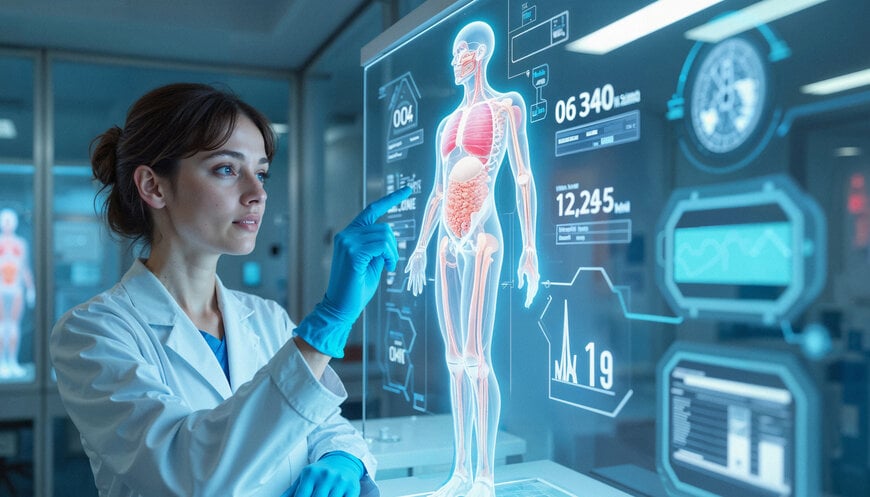
GE HealthCare and Mass General Brigham have initiated a research collaboration to develop generative artificial intelligence (AI) tools aimed at delivering more personalized radiation therapy. The joint technical program focuses on integrating multimodal data processing capabilities into GE HealthCare's Intelligent Radiation Therapy (iRT) platform to streamline oncology workflows across magnetic resonance (MR), computed tomography (CT), and theranostics environments.
Operational Bottlenecks in Radiation Oncology Planning
Radiation oncology requires coordinating complex data streams across independent hardware and software platforms. Clinical workflows frequently require up to 17 discrete manual stages merely to import treatment parameters, while operational analyses of clinical cases indicate more than 44 variations in treatment planning pathways. These inefficiencies are largely driven by unstructured information, such as clinical progress notes, pathology summaries, and disconnected imaging files. The lack of standard interface protocols and automated data reconciliation often delays the transition of oncology patients from diagnosis to active radiotherapy.
Architecture of the Generative AI Integration
The technical initiative unites Mass General Brigham's clinical physics domain expertise with the software infrastructure of GE HealthCare. The project evaluates an AI query system capable of extracting, indexing, and synthesizing both structured electronic health record data and unstructured clinical assets.
At the functional level, the system aims to parse complex medical texts, DICOM imaging sets, and historical dosimetry plans into unified contextual profiles. Clinicians can execute direct natural language queries to retrieve patient history, anatomical landmarks, and treatment timeline markers. This capability operates alongside the workflow orchestration engine of iRT, which automates cross-department handoffs between medical physicists, dosimetrists, and radiation oncologists to support individualized treatment decisions.
Clinical Performance and System Integration
The joint research expands upon previous software integration between the entities, where clinical workflow solutions implemented across more than 11,000 treatment plans at Massachusetts General Hospital reduced the operational interval between patient intake and treatment initiation from 30 days to eight days.
The ongoing deployment phase explores incorporating these generative retrieval algorithms into broader multimodality oncology workflows, including MR-guided therapy, CT simulation, and molecular radiotherapy guidance. Integrating automated data synthesis within existing picture archiving and communication systems (PACS) and oncology information systems (OIS) is designed to minimize manual data curation, prevent configuration errors during dose planning, and improve operational throughput in high-volume cancer centers.
Edited by Natania Lyngdoh, Induportals editor, assisted by AI.
www.gehealthcare.com

