
www.medical-devices.tech
10
'26
Written on Modified on
Integrating Enterprise Medical Imaging via Cloud Infrastructure
GE HealthCare and Intelerad Medical Systems deploy connected diagnostic viewers and automated image exchange platforms to optimize clinical workflow efficiency.
www.gehealthcare.com
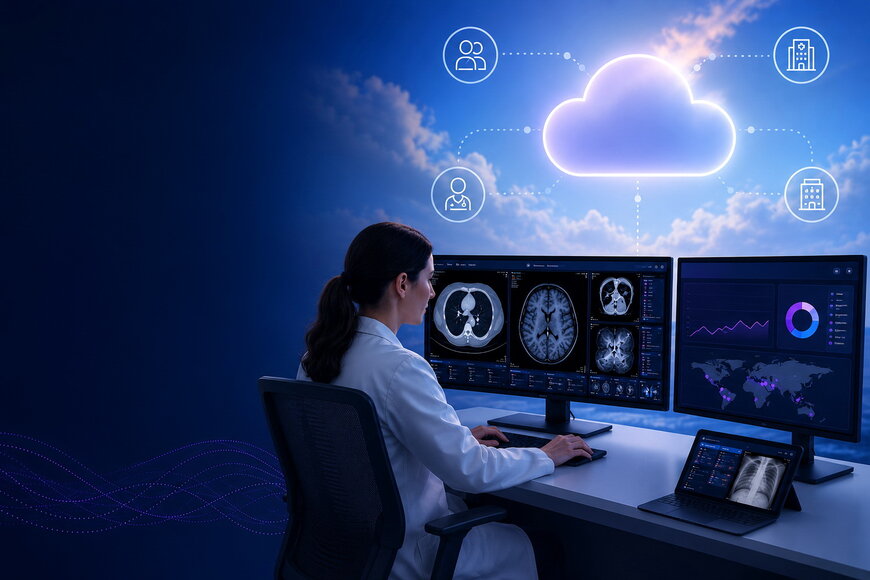
Medical imaging departments face increasing study volumes and rising case complexity amidst ongoing radiologist workforce shortages. To maintain diagnostic throughput and ensure timely clinical decisions, healthcare networks require the ability to securely interpret studies from distributed locations. GE HealthCare and its subsidiary company, Intelerad Medical Systems, are addressing these operational constraints by deploying integrated, cloud-enabled enterprise imaging solutions designed to unify workflows and automate data access across multi-facility healthcare environments.
Technical Architecture and System Responsibilities
The combined deployment leverages distinct, complementary software architectures to streamline radiologist workflows and reduce cognitive load.
GE HealthCare is responsible for the Genesis Radiology Workspace, which centers on View, an FDA 510(k)-cleared diagnostic viewer. This system utilizes a zero-footprint web architecture, meaning the diagnostic viewer runs entirely within a web browser without requiring local software installation or data storage. This setup allows high-performance server-side rendering to stream current and prior studies to any location without compromising visualization speed. The workspace integrates user-defined artificial intelligence prioritization algorithms that automatically triage workflows, surfacing critical findings to the top of the reading queue based on predefined clinical severity markers.
Intelerad Medical Systems provides the underlying data exchange layer through InteleShare, a cloud-based medical image exchange platform. InteleShare manages the secure transfer and synchronization of DICOM (Digital Imaging and Communications in Medicine) data across disparate institutional networks. The platform utilizes native Electronic Health Record integration interfaces to automate workflows, removing manual transmission steps when patients transfer between facilities.
Implementation and Operational Impact
The technologies are engineered to integrate directly into existing hospital information systems and digital infrastructure. By separating the high-performance diagnostic visualization layer from the local hardware, the system allows healthcare networks to utilize decentralized workforce models, enabling radiologists to read cases remotely.
The operational integration of these platforms focuses on measurable workflow mechanisms rather than processing speed promises. Automating the retrieval of prior images alongside current studies reduces manual search times. Concurrently, the cloud-based data exchange minimizes the administrative burden associated with physical media transfer or manual routing, stabilizing process efficiency across complex health networks.
Edited by Evgeny Churilov, Induportals Media - Adapted by AI.
www.gehealthcare.com

