
www.medical-devices.tech
01
'26
Written on Modified on
Quantitative Dynamic Imaging for Spatiotemporal Radiotracer Distribution Analysis
Software engineered by GE HealthCare for kinetic modeling of positron emission tomography data undergoes regulatory review to enhance disease characterization precision.
www.gehealthcare.com
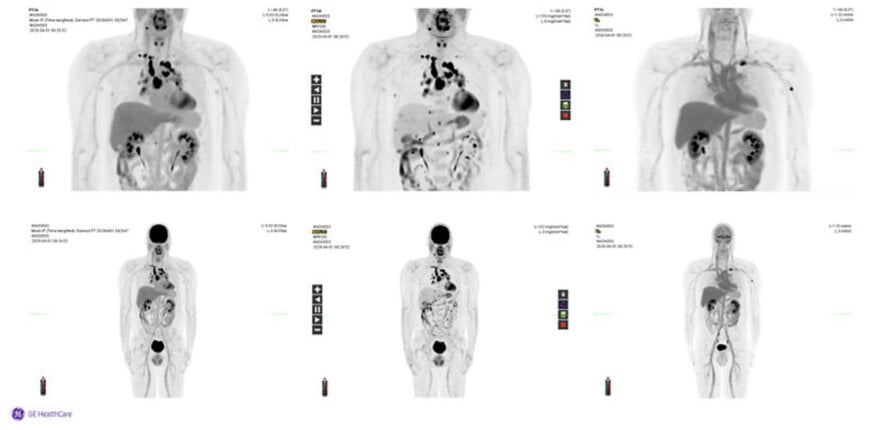
The submission of a 510(k) notification to the United States Food and Drug Administration for MIM KineticID marks a transition toward standardized four-dimensional imaging workflows. This software system introduces automated parametric modeling to quantify the metabolic and pharmacokinetic behavior of radiotracers across oncological, neurological, and cardiovascular applications.
Traditional clinical positron emission tomography (PET) relies primarily on visual interpretation of static images, utilizing the standardized uptake value (SUV) to measure tissue radioactivity at a single point in time. While SUV provides a benchmark for tracer accumulation, it lacks the temporal resolution required to differentiate between physiological delivery variations and true tissue metabolism. Static scans cannot separate blood-pool activity from specific tissue binding, which frequently complicates the differentiation between malignant lesions and inflammatory tissue.
Dynamic PET imaging addresses this limitation by continuously recording radioactivity concentration changes within tissue and blood plasma from the moment of injection. Kinetic modeling software translates these time-activity curves into absolute physiological parameters. The software executes Patlak data analysis and customizable mathematical curve fitting to determine macroscopic parameters, including the net influx rate constant (Ki) and the volume of distribution (Vd). These metrics isolate tracer transport across the capillary wall from subsequent intracellular phosphorylation or receptor binding.
To integrate this complex mathematical framework into clinical and research workflows, the application provides multi-tracer comparative analysis, enabling side-by-side evaluation of distinct radiopharmaceuticals such as Fluorodeoxyglucose (FDG) and Prostate-Specific Membrane Antigen (PSMA) ligands. The system automates the extraction of the arterial input function—the tracer concentration profile within blood plasma over time—reducing the historical reliance on invasive arterial blood sampling.
Operating within a vendor-neutral Digital Imaging and Communications in Medicine (DICOM) environment, the architecture processes volumetric imaging files from any compliant PET system. This interoperability allows laboratories to perform multi-modality image fusion and automated longitudinal therapy response assessments across heterogeneous imaging fleets.
Additional Context
This section details technical specifications and competitive benchmarking not included in the original product announcement.
Kinetic modeling platforms require precise synchronization with PET scanners to account for raw physical decay factors and detector dead-time. Commercially available alternatives include Siemens Healthineers Syngo.via Frontier and PMOD Biomedical Image Quantification software.
While PMOD remains a deeply established benchmark for complex, pixel-by-pixel compartmental modeling in academic research, its highly manual operational interface creates throughput bottlenecks in high-volume clinical setups. Conversely, integrated scanner software like Syngo.via offers seamless automated clinical workflows, but it is primarily optimized for native hardware.
The vendor-neutral architecture of MIM KineticID utilizes standardized DICOM conversion algorithms to maintain spatial alignment and quantification consistency (Bq/mL) across variable scanner geometries and detector materials, including both traditional photomultiplier tubes and modern silicon photomultipliers.
Edited by Natania Lyngdoh, Induportals Editor, with AI assistance.
www.gehealthcare.com

