
www.medical-devices.tech
08
'26
Written on Modified on
Fraunhofer Showcases Digital Health Innovations At DMEA Berlin Trade Fair 2026
From April 21 to 23, in Berlin, the Fraunhofer-Gesellschaft will present advanced AI solutions and data-driven technologies designed to enhance medical decision-making and streamline healthcare documentation.
www.fraunhofer.de
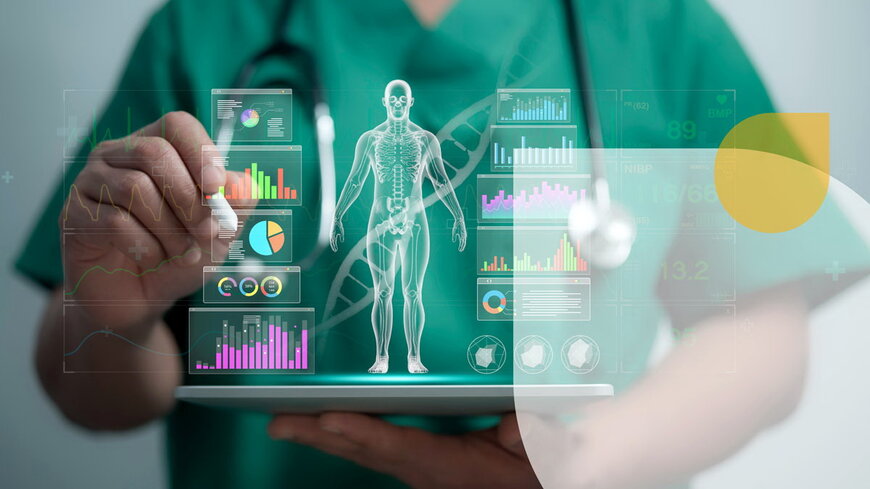
Modern healthcare systems face a dual challenge: an overwhelming volume of medical data and a critical shortage of specialized staff. While many digital health solutions offer basic data storage, the primary differentiator for advanced clinical technology lies in the transition from data collection to sound, actionable decision-making. At DMEA 2026, the Fraunhofer-Gesellschaft is demonstrating how its AI-driven ecosystems provide a superior level of precision and trust compared to standard market offerings, specifically through validated models and interactive visual analytics.
Enhanced Precision in Specialized Medical Fields
A significant limitation of generic medical AI is the "black box" nature of its results, which often lacks the clinical depth required for specialized fields like nephrology or cardiology. New developments in visual analytics now allow physicians to navigate heterogeneous patient datasets — ranging from laboratory values to surgical imaging—using interactive tools like RenalViz and RENALCARE. Unlike traditional diagnostic software, these systems use explainable AI to make predictions transparent, ensuring that medical staff can verify the reasoning behind an AI’s conclusion before proceeding with surgical or therapeutic interventions.
Streamlining Development with Adaptive Back-ends
In the competitive landscape of health tech, the speed of model development often compromises data quality. To address this, current research focuses on agile back-end infrastructures like CuraMate AI Development, which integrates iterative correction workflows. This approach allows experts to focus only on "uncertain" data areas, significantly reducing the manual annotation effort required by older systems. By utilizing foundation models pre-trained on vast datasets, these technologies remain effective even when working with smaller, highly specific sets of pathology or radiology data, a common hurdle for conventional startups.
Bridging the Gap in Women’s Health and Remote Monitoring
While many consumer health apps offer basic symptom tracking, there is a distinct shift toward clinically validated, gender-specific digital assistants. Systems like the SympATA app utilize advanced language models to provide a bridge between patient self-monitoring and clinical consultation, offering a clear data overview that doctors can use immediately in diagnostic conversations. Furthermore, the evolution of contactless vital data acquisition, such as measuring pulse or breathing via camera sensors, enables a level of patient monitoring that was previously only possible with wearable hardware, offering a more non-intrusive and scalable solution for home care and geriatric support.
Ensuring Fairness and Clinical Transfer
The final stage of differentiation for these technologies is the rigorous verification of performance criteria, including robustness and fairness. By employing specialized statistical toolboxes, developers can ensure that AI models do not just work in a lab setting but are ready for the complexities of daily clinical practice. This focus on validated, trustworthy AI serves as a direct answer to the industry's need for reliable digital tools that reduce staff burden rather than increasing it through technical complexity.
Edited by Evgeny Churilov, Induportals Media - Adapted by AI.
www.fraunhofer.de

