
www.medical-devices.tech
15
'26
Written on Modified on
Miniaturized Ultrasound Transducers for Transurethral Prostate Intervention Systems
Fraunhofer IPMS partners with MaxQ Medical to engineer capacitive micromachined ultrasonic transducers for minimally invasive prostate therapy.
www.fraunhofer.de
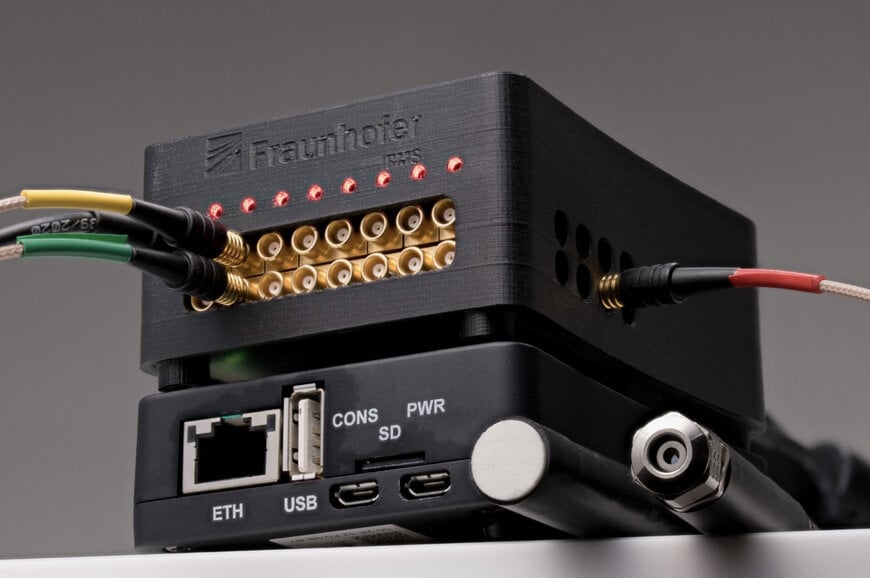
© Fraunhofer IPMS: CMUT Evaluation Kit of Fraunhofer IPMS.
Urological interventions for benign prostatic hyperplasia require precise spatial targeting to ablate obstructive parenchymal adenoma while avoiding irreversible thermal or mechanical trauma to the urinary sphincter and neurovascular bundles. In response to this surgical constraint, the Fraunhofer Institute for Photonic Microsystems (Fraunhofer IPMS) has partnered with medical device developer MaxQ Medical to engineer miniaturized ultrasound transducer components for MaxQ Medical's integrated transurethral clinical platform.
Microsystems Engineering and CMUT Operating Principles
Standard endoscopic ultrasound instrumentation has historically relied on bulk piezoceramic materials, such as lead zirconate titanate (PZT). While piezoelectric elements deliver acoustic pressure, their mechanical dicing constraints, matching-layer requirements, and rigid planar geometry impede high-density channel integration inside sub-millimetre catheter apertures.
Capacitive Micromachined Ultrasonic Transducers (CMUTs) resolve these scaling bottlenecks by utilizing semiconductor photolithography and microelectromechanical systems (MEMS) surface or wafer-bonding techniques. A CMUT element consists of a metallized vibrating membrane suspended over a vacuum cavity on a doped silicon substrate, functioning as a variable capacitor. Applying an alternating voltage over a direct-current bias modulates the electrostatic field, causing the membrane to oscillate and emit high-frequency acoustic waves into the surrounding fluid medium. Conversely, incoming acoustic pressure waves deflect the membrane, inducing capacitance fluctuations that are acquired as high-resolution ultrasound image data.
Silicon Integration in Endoscopic Surgical Workflows
Within the development partnership, Fraunhofer IPMS leads component microfabrication, process integration, and electromechanical characterization. Fabricating transducer arrays directly on silicon wafers allows the integration of multi-channel acoustic arrays into footprint envelopes measuring one cubic millimetre or less per individual element. This level of miniaturization enables thousands of active transducer channels to fit within a single flexible or semi-rigid transurethral shaft.
The resulting sensor architecture combines acoustic imaging and therapeutic delivery within a common device footprint. Because CMUT arrays exhibit broad acoustic fractional bandwidths—often exceeding 100 percent in fluid-immersion environments—a single transducer assembly can operate across multi-frequency regimes. The device can toggle between high-frequency pulse-echo modes for real-time anatomical mapping and low-frequency continuous or burst modes required for targeted therapeutic thermal coagulation or mechanical cavitation, eliminating instrument exchange during surgery.
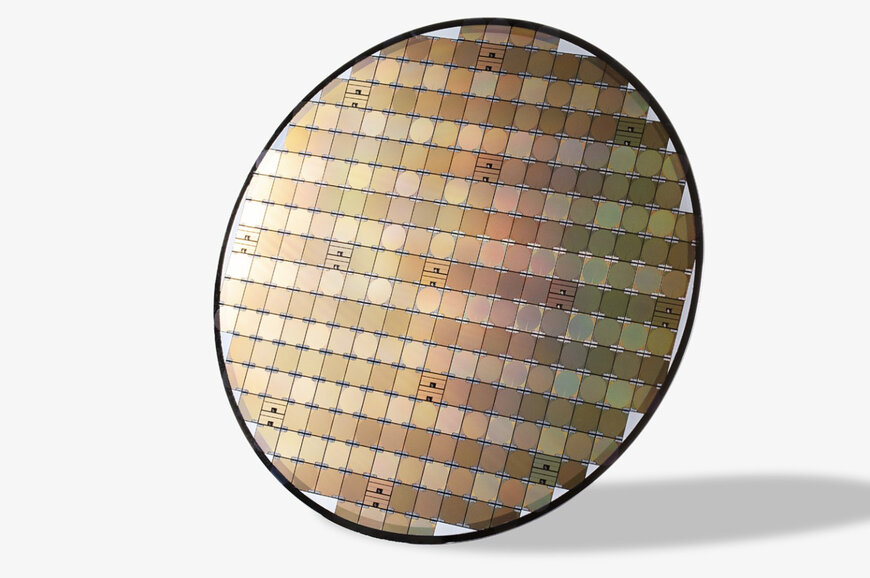
© Fraunhofer IPMS: CMUT Wafer of Fraunhofer IPMS.
Clinical Program Acceleration and Commercial Horizon
MaxQ Medical, an engineering spinout originating from Stanford University ultrasound research incubated by Orchard Ultrasound Innovation, secured 31.5 million dollars in Series A venture capital funding to accelerate its regulatory testing protocols and clinical evaluation programs.
The primary clinical indication targeted by the platform is benign prostatic hyperplasia (BPH). By positioning the ultrasound source transurethrally within the prostatic urethra, the system directs focused acoustic energy laterally into the transition zone of the prostate. Real-time intraoperative acoustic monitoring visualizes tissue boundaries continuously, allowing clinicians to tailor ablation margins to individual anatomy while preserving contiguous anatomical landmarks. Beyond initial benign adenoma resection, the hardware architecture is designed to support focal oncological ablations, precision soft-tissue biopsies, and diagnostic margin assessment.
Additional Context:
This section details technical specifications and competitive benchmarking not included in the original product announcement.
Minimally invasive surgical treatments for benign prostatic hyperplasia currently center around mechanical tissue resection, thermal ablation, and mechanical implants. The clinical benchmark for operative BPH intervention remains Transurethral Resection of the Prostate (TURP), which mechanically shears hyperplastic tissue using monopolar or bipolar electrosurgical loops. While TURP delivers established durability, it carries perioperative risks of bleeding, retrograde ejaculation, and transurethral resection syndrome.
In the domain of ultrasound-based prostate therapies, the established industrial benchmark is the TULSA-PRO system developed by Profound Medical. TULSA-PRO performs transurethral ultrasound ablation via planar piezoelectric transducer arrays coupled with active urethral and rectal cooling; however, TULSA-PRO does not generate onboard real-time diagnostic ultrasound imaging, requiring continuous intraoperative guidance within an MRI bore to monitor real-time thermal dose via MR thermometry. Another technological benchmark, histotripsy platforms developed by HistoSonics (Edison system), delivers non-thermal mechanical tissue fractionation, though deployment remains predominantly focused on abdominal parenchymal organs such as the liver using extracorporeal transducer arrays.
CMUT technology, developed across academic research centers since the 1990s and deployed commercially in handheld point-of-care probes such as Butterfly Network's Butterfly iQ, operates under established semiconductor and medical device standards, including IEC 60601-2-37 for acoustic output exposure and ISO 10993 for biocompatibility in mucosal contact. By leveraging CMOS-compatible semiconductor wafer manufacturing in 200 mm cleanroom lines, CMUT arrays provide superior acoustic impedance matching to human soft tissue compared to bare piezoelectric ceramics without requiring bulky acoustic matching layers, reducing acoustic attenuation and enabling simultaneous therapeutic beamforming within sub-20 French urological instrument diameters.
Edited by Natania Lyngdoh, Induportals editor, with AI assistance.
www.ipms.fraunhofer.com
Urological interventions for benign prostatic hyperplasia require precise spatial targeting to ablate obstructive parenchymal adenoma while avoiding irreversible thermal or mechanical trauma to the urinary sphincter and neurovascular bundles. In response to this surgical constraint, the Fraunhofer Institute for Photonic Microsystems (Fraunhofer IPMS) has partnered with medical device developer MaxQ Medical to engineer miniaturized ultrasound transducer components for MaxQ Medical's integrated transurethral clinical platform.
Microsystems Engineering and CMUT Operating Principles
Standard endoscopic ultrasound instrumentation has historically relied on bulk piezoceramic materials, such as lead zirconate titanate (PZT). While piezoelectric elements deliver acoustic pressure, their mechanical dicing constraints, matching-layer requirements, and rigid planar geometry impede high-density channel integration inside sub-millimetre catheter apertures.
Capacitive Micromachined Ultrasonic Transducers (CMUTs) resolve these scaling bottlenecks by utilizing semiconductor photolithography and microelectromechanical systems (MEMS) surface or wafer-bonding techniques. A CMUT element consists of a metallized vibrating membrane suspended over a vacuum cavity on a doped silicon substrate, functioning as a variable capacitor. Applying an alternating voltage over a direct-current bias modulates the electrostatic field, causing the membrane to oscillate and emit high-frequency acoustic waves into the surrounding fluid medium. Conversely, incoming acoustic pressure waves deflect the membrane, inducing capacitance fluctuations that are acquired as high-resolution ultrasound image data.
Silicon Integration in Endoscopic Surgical Workflows
Within the development partnership, Fraunhofer IPMS leads component microfabrication, process integration, and electromechanical characterization. Fabricating transducer arrays directly on silicon wafers allows the integration of multi-channel acoustic arrays into footprint envelopes measuring one cubic millimetre or less per individual element. This level of miniaturization enables thousands of active transducer channels to fit within a single flexible or semi-rigid transurethral shaft.
The resulting sensor architecture combines acoustic imaging and therapeutic delivery within a common device footprint. Because CMUT arrays exhibit broad acoustic fractional bandwidths—often exceeding 100 percent in fluid-immersion environments—a single transducer assembly can operate across multi-frequency regimes. The device can toggle between high-frequency pulse-echo modes for real-time anatomical mapping and low-frequency continuous or burst modes required for targeted therapeutic thermal coagulation or mechanical cavitation, eliminating instrument exchange during surgery.
© Fraunhofer IPMS: CMUT Wafer of Fraunhofer IPMS.
Clinical Program Acceleration and Commercial Horizon
MaxQ Medical, an engineering spinout originating from Stanford University ultrasound research incubated by Orchard Ultrasound Innovation, secured 31.5 million dollars in Series A venture capital funding to accelerate its regulatory testing protocols and clinical evaluation programs.
The primary clinical indication targeted by the platform is benign prostatic hyperplasia (BPH). By positioning the ultrasound source transurethrally within the prostatic urethra, the system directs focused acoustic energy laterally into the transition zone of the prostate. Real-time intraoperative acoustic monitoring visualizes tissue boundaries continuously, allowing clinicians to tailor ablation margins to individual anatomy while preserving contiguous anatomical landmarks. Beyond initial benign adenoma resection, the hardware architecture is designed to support focal oncological ablations, precision soft-tissue biopsies, and diagnostic margin assessment.
Additional Context:
This section details technical specifications and competitive benchmarking not included in the original product announcement.
Minimally invasive surgical treatments for benign prostatic hyperplasia currently center around mechanical tissue resection, thermal ablation, and mechanical implants. The clinical benchmark for operative BPH intervention remains Transurethral Resection of the Prostate (TURP), which mechanically shears hyperplastic tissue using monopolar or bipolar electrosurgical loops. While TURP delivers established durability, it carries perioperative risks of bleeding, retrograde ejaculation, and transurethral resection syndrome.
In the domain of ultrasound-based prostate therapies, the established industrial benchmark is the TULSA-PRO system developed by Profound Medical. TULSA-PRO performs transurethral ultrasound ablation via planar piezoelectric transducer arrays coupled with active urethral and rectal cooling; however, TULSA-PRO does not generate onboard real-time diagnostic ultrasound imaging, requiring continuous intraoperative guidance within an MRI bore to monitor real-time thermal dose via MR thermometry. Another technological benchmark, histotripsy platforms developed by HistoSonics (Edison system), delivers non-thermal mechanical tissue fractionation, though deployment remains predominantly focused on abdominal parenchymal organs such as the liver using extracorporeal transducer arrays.
CMUT technology, developed across academic research centers since the 1990s and deployed commercially in handheld point-of-care probes such as Butterfly Network's Butterfly iQ, operates under established semiconductor and medical device standards, including IEC 60601-2-37 for acoustic output exposure and ISO 10993 for biocompatibility in mucosal contact. By leveraging CMOS-compatible semiconductor wafer manufacturing in 200 mm cleanroom lines, CMUT arrays provide superior acoustic impedance matching to human soft tissue compared to bare piezoelectric ceramics without requiring bulky acoustic matching layers, reducing acoustic attenuation and enabling simultaneous therapeutic beamforming within sub-20 French urological instrument diameters.
Edited by Natania Lyngdoh, Induportals editor, with AI assistance.
www.ipms.fraunhofer.com

