
www.medical-devices.tech
04
'26
Written on Modified on
Robotic and Implant Innovations for Orthopaedic Surgery
Stryker presents new knee implants, robotic surgery systems, and surgical power tools at AAOS 2026 to support precision orthopaedic procedures and digital surgical workflows.
www.stryker.com
At the American Academy of Orthopaedic Surgeons (AAOS) 2026 Annual Meeting in New Orleans, Stryker introduced new implant components, robotic-assisted surgical systems, and surgical power tools aimed at improving precision and workflow efficiency in orthopaedic surgery. The updates extend the company’s Triathlon knee replacement platform, Mako robotic surgery ecosystem, and orthopaedic power tool portfolio.
Orthopaedic Technology Introduced at AAOS 2026
Stryker presented several additions across joint replacement, robotic surgery, and surgical instrumentation during the AAOS 2026 Annual Meeting held in New Orleans, United States. The developments target orthopaedic procedures including knee and shoulder replacement, trauma surgery, and extremity reconstruction.
The technologies integrate implant design, robotics-assisted surgical planning, and surgical instrumentation to support increasingly data-driven orthopaedic procedures. Such systems contribute to the development of a connected surgical ecosystem where digital planning tools, robotic guidance, and implant systems operate within a coordinated workflow.
Triathlon Knee System: New Implant Materials and Kinematic Designs- Titanium Nitride Femoral Component for Metal Sensitivity
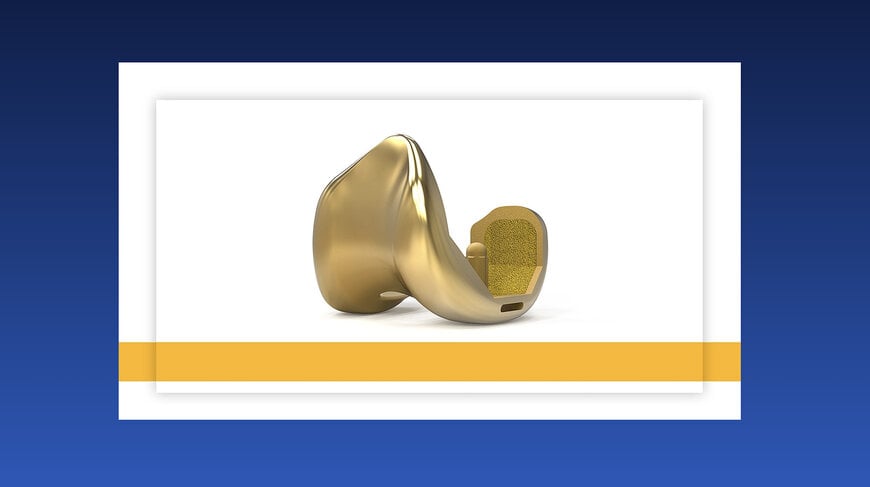
One of the main additions is Triathlon Gold, a femoral component developed for patients with metal sensitivity concerns. The implant uses additive manufacturing techniques to produce the component structure and incorporates a titanium nitride surface layer.
Titanium nitride coatings are used in orthopaedic implants to improve wear resistance and reduce metal ion release. The component is compatible with the existing Triathlon Total Knee System, which has accumulated more than two decades of clinical use.
The implant also integrates cementless fixation technology designed to support bone integration while maintaining compatibility with both cemented and cementless surgical workflows.
Medial Stabilized Insert for Knee Kinematics
Another development within the Triathlon platform is the Medial Stabilized (MS) Insert, a tibial insert option designed to provide additional stability for primary knee arthroplasty patients.
The insert is engineered to reproduce more natural rotational movement of the knee joint while maintaining joint stability during flexion and load transfer. It is compatible with both the Triathlon cementless implant system and Mako robotic-assisted knee surgery procedures.
These implant options aim to provide surgeons with additional design configurations for tailoring knee arthroplasty procedures to patient-specific anatomical and biomechanical conditions.
Expansion of the Mako Robotic Surgery Ecosystem- Robotic Planning and Execution in Shoulder Arthroplasty
Stryker also announced the full commercial release of Mako Shoulder, a robotic-assisted platform designed for primary reverse shoulder arthroplasty.
The system integrates three components within a digital surgical workflow:
- Blueprint preoperative planning software
- Tornier Perform Reversed shoulder implants
- Mako robotic assistance during surgery
Preoperative imaging and planning tools enable surgeons to define implant positioning before surgery, while robotic guidance assists with intraoperative execution of the surgical plan. The company indicated that the shoulder platform will also become available on the Mako 4 system during the second half of 2026.
Handheld Robotic Power System for Knee Surgery
Another addition to the robotic portfolio is Mako RPS (Robotic Power System) for total knee arthroplasty.
Unlike conventional robotic arms, the system uses a handheld robotic instrument designed to combine robotic guidance with the familiarity of manual power tools. The device is compatible with the Triathlon knee replacement system and targets surgeons seeking robotic-enabled precision while maintaining manual control over surgical instruments.
Handheld robotic systems represent an emerging segment in orthopaedic robotics, offering lower system complexity compared with large robotic platforms while still integrating digital surgical planning.
New Orthopaedic Surgical Power Tools
Stryker also introduced several additions to its orthopaedic power tool portfolio.
The BPX cordless micro power tool system is designed for extremity procedures, where compact instruments and precise control are required for operations involving small bones.
Another system, TPX HD, supports procedures including joint revision surgery, trauma interventions, and minimally invasive foot and ankle operations. The system includes specialized attachments capable of cutting metal implants and bone cement during revision surgeries.
Complementing these systems is the 7900 attachment series, a new generation of surgical tool attachments designed to expand compatibility and functionality across multiple orthopaedic procedures.
Application Areas in Orthopaedic Surgery
The technologies presented address multiple orthopaedic surgical domains, including:
Handheld Robotic Power System for Knee Surgery
Another addition to the robotic portfolio is Mako RPS (Robotic Power System) for total knee arthroplasty.
Unlike conventional robotic arms, the system uses a handheld robotic instrument designed to combine robotic guidance with the familiarity of manual power tools. The device is compatible with the Triathlon knee replacement system and targets surgeons seeking robotic-enabled precision while maintaining manual control over surgical instruments.
Handheld robotic systems represent an emerging segment in orthopaedic robotics, offering lower system complexity compared with large robotic platforms while still integrating digital surgical planning.
New Orthopaedic Surgical Power Tools
Stryker also introduced several additions to its orthopaedic power tool portfolio.
The BPX cordless micro power tool system is designed for extremity procedures, where compact instruments and precise control are required for operations involving small bones.
Another system, TPX HD, supports procedures including joint revision surgery, trauma interventions, and minimally invasive foot and ankle operations. The system includes specialized attachments capable of cutting metal implants and bone cement during revision surgeries.
Complementing these systems is the 7900 attachment series, a new generation of surgical tool attachments designed to expand compatibility and functionality across multiple orthopaedic procedures.
Application Areas in Orthopaedic Surgery
The technologies presented address multiple orthopaedic surgical domains, including:
- Knee arthroplasty
- Reverse shoulder arthroplasty
- Trauma surgery
- Foot and ankle reconstruction
- Joint revision procedures
By combining implant design, robotic guidance, and surgical instrumentation, these systems aim to support surgical accuracy and procedural reproducibility while integrating digital planning tools into operating room workflows.
Industry Context
Robotic-assisted orthopaedic surgery has expanded significantly during the past decade, particularly in knee and hip replacement procedures. Platforms integrating preoperative planning software, robotic guidance, and implant systems are increasingly used to improve alignment accuracy and surgical consistency.
The developments presented at AAOS 2026 reflect a broader industry shift toward digitally integrated surgical platforms that combine robotics, implant technology, and data-driven surgical planning.
www.stryker.com
Industry Context
Robotic-assisted orthopaedic surgery has expanded significantly during the past decade, particularly in knee and hip replacement procedures. Platforms integrating preoperative planning software, robotic guidance, and implant systems are increasingly used to improve alignment accuracy and surgical consistency.
The developments presented at AAOS 2026 reflect a broader industry shift toward digitally integrated surgical platforms that combine robotics, implant technology, and data-driven surgical planning.
www.stryker.com

