
www.medical-devices.tech
03
'26
Written on Modified on
Fraunhofer MEVIS Enables Certified, Faster MRI Sequences
gammaSTAR platform and SpinIt project support manufacturer-independent MR sequence development and medical device certification for accelerated MRI examinations.
www.fraunhofer.de
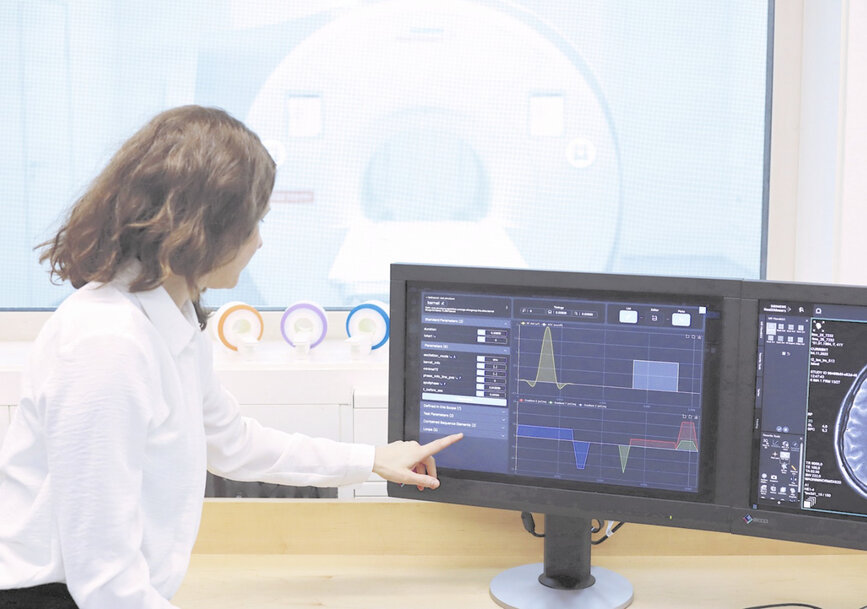
Hospitals, imaging centers and research institutions are seeking ways to shorten MRI examination times while improving diagnostic quality. At the Fraunhofer Institute for Digital Medicine MEVIS, researchers are addressing a key bottleneck: transferring innovative MR sequences from research into routine clinical use. With the gammaSTAR software platform and the SpinIt project, the institute is developing a structured, manufacturer-independent pathway for certification and deployment of advanced MRI sequences.
Why MR sequences determine speed and image quality
In magnetic resonance imaging, MR sequences define how radiofrequency pulses are transmitted, magnetic gradients are switched and signals are acquired over time. These parameters directly influence image contrast, spatial resolution and acquisition time.
Advanced sequences under development aim to reduce scanning times from approximately 30 minutes to only a few minutes, while introducing new image contrasts that can enhance diagnostic precision. Faster examinations reduce patient discomfort in confined scanner environments and increase scanner throughput in busy clinical settings.
However, developing and validating such sequences requires extremely precise control of hardware components. Even minor programming inaccuracies can compromise image integrity.
Overcoming regulatory barriers to innovation
Historically, MR sequences have been developed within proprietary environments tied to specific scanner manufacturers and approved together with the corresponding hardware. This model limits independent research groups and start-ups seeking to introduce novel approaches.
To address this constraint, Fraunhofer MEVIS launched the SpinIt project under the EXIST program of the German Federal Ministry for Economic Affairs and Energy. The project builds on gammaSTAR, a software platform that enables manufacturer-independent development of MR sequences.
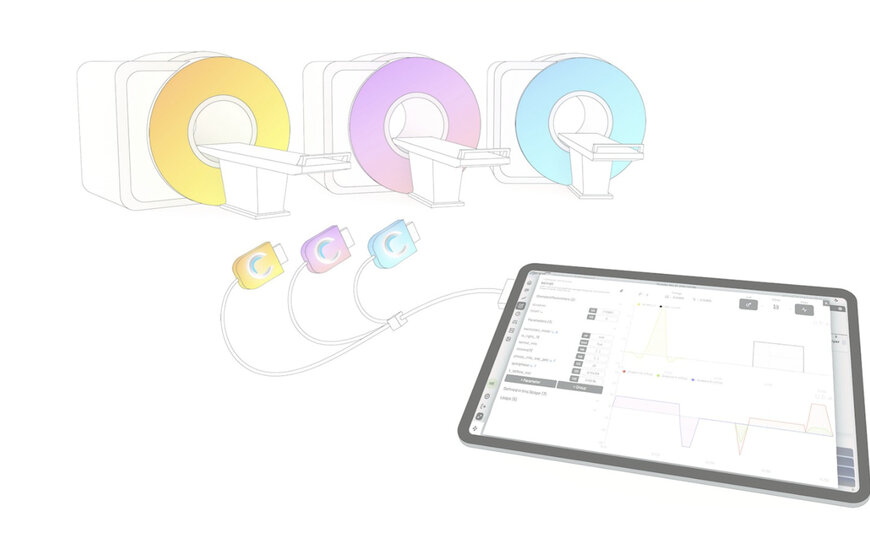
gammaSTAR allows researchers to implement sequences without using vendor-specific programming languages. Standardized drivers enable execution on different MRI systems, creating a foundation for cross-platform deployment. The platform has been designed so that developed sequences already meet defined quality criteria aligned with subsequent medical device approval requirements.
Integrated certification of acquisition and reconstruction
An MR sequence does not only control data acquisition; it must also be paired with image reconstruction algorithms that convert raw data into clinically interpretable images. Both acquisition and reconstruction must undergo joint validation and certification.
Within the SpinIt framework, sequences are systematically simulated and tested. For example, spatial orientation checks ensure correct left-right assignment, preventing potential diagnostic errors. Such validation steps are essential because even a single sign error in sequence programming could lead to incorrect image orientation.
The objective is to establish a reproducible certification pathway allowing third-party MR sequences to be approved as independent medical devices—an approach not previously realized in standard clinical workflows.
Industry collaboration for regulated access
A key component of the initiative is collaboration with Siemens Healthineers, which provides a certified interface for external software integration. This interface enables MR sequences developed by third parties to be assessed and approved within a regulated framework.
Such regulated access could create new opportunities for research groups and start-ups to contribute validated imaging innovations to clinical practice without being limited to a single manufacturer ecosystem.
Benefits for multicenter clinical trials
System-independent MR sequences combined with identical reconstruction pipelines also address challenges in multicenter studies. Currently, comparable datasets often require identical scanner models or extensive protocol harmonization, which increases cost and complexity.
Using standardized sequences across different MRI systems could improve data comparability while reducing preparation effort. This approach may lower costs and streamline coordination in large-scale clinical trials.
Toward clinical deployment of research innovations
At the conclusion of the 18-month EXIST funding phase, a decision will be made on whether SpinIt will transition into a spin-off providing certification and quality assurance services for MR sequences.
By creating a structured pathway from research development to certified medical device approval, Fraunhofer MEVIS aims to accelerate the integration of innovative MRI technologies into routine clinical use. For patients and healthcare providers, this could mean shorter examination times, improved diagnostic capabilities and broader access to advanced imaging techniques.
www.fraunhofer.com

