
www.medical-devices.tech
11
'26
Written on Modified on
Handheld Robotic Power Tool for Knee Surgery
Limited release of a handheld robotic orthopaedic system from Stryker targeting total knee procedures with integration into existing surgical workflows.
www.stryker.com
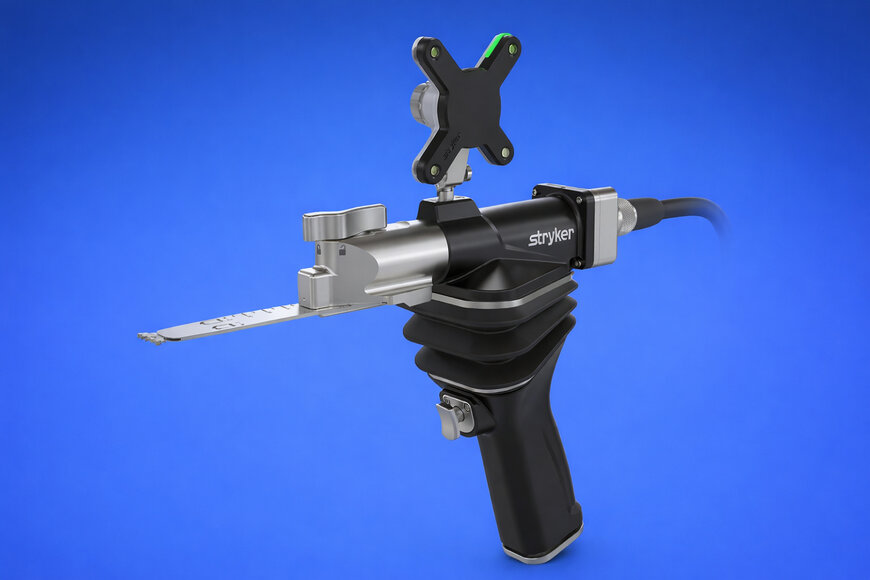
Stryker has initiated the limited market release of its Mako Robotic Power System (RPS) for total knee procedures, marking the company’s expansion of its robotic platforms into handheld robotics for orthopaedic applications. The system is designed for surgeons seeking robotic-assisted precision while maintaining a workflow closer to traditional power tools.
Background and Technical Context
Stryker’s Mako brand has been a significant presence in orthopaedic robotic support systems through its established Mako SmartRobotics ecosystem, which includes robotic-arm assisted platforms previously used in joint replacement procedures. Integrated planning tools and robotic guidance aim to improve alignment and precision for total joint surgeries.
The new Mako RPS handheld robotics platform is compatible with Stryker’s established Triathlon Total Knee System. It combines robotic guidance elements with a handheld saw, allowing intraoperative planning and surgical execution without traditional cutting blocks. This positioning serves surgeons and surgical facilities that may prefer minimal changes to existing workflows or less complex equipment integration.
System Design and Function
Mako RPS features a robotically enabled saw with active adjustment technology that senses a surgeon’s hand movements and continually adjusts guidance to align with a pre-operative surgical plan. This mechanism operates as a real-time control loop between the device and the surgeon’s input, maintaining alignment with the planned bone resection trajectory.
The system is designed to integrate with Stryker’s Q Guidance System, which serves as a multi-specialty guidance and planning platform across orthopaedic procedures. By forgoing cutting blocks and using intraoperative guidance, Mako RPS aligns with broader trends in digital surgical planning and the automation of repetitive tasks, potentially lowering variability across procedures.
Application and Clinical Workflow
The handheld form factor positions Mako RPS between traditional manual instruments and larger robotic arm-assisted systems. This design choice aims to reduce the barrier to adopting robotics in environments such as ambulatory surgery centres or high-volume orthopaedic practices that prioritize throughput and minimal workflow disruption. Industry reports suggest the platform may appeal to surgeons not already using larger robotic systems but seeking enhanced precision over fully manual techniques.
Compatible with the Triathlon Total Knee System, the platform is explicitly focused on total knee arthroplasty. Early clinical cases have reportedly begun, indicating initial procedural adoption.
Position Within Surgical Robotics
Handheld robotic platforms like Mako RPS represent a nuanced approach to integrating robotics into surgical workflows. Rather than replacing traditional robotics entirely, the design leverages robotic guidance in a form factor familiar to surgeons. This places the product between full robotic arm platforms and manual instruments in terms of complexity, cost, and use-case scope.
Demonstrations and further details of the technology were scheduled for display at the American Academy of Orthopaedic Surgeons (AAOS) 2026 Annual Meeting in New Orleans.
Implications for the Orthopaedic Data and Surgical Ecosystem
By integrating robotic guidance directly into a handheld tool, Mako RPS contributes to the broader digital supply chain in orthopaedics, connecting surgical planning data, intraoperative guidance, and instrument control. If adoption scales, this could influence expectations around data-driven surgical precision and post-operative outcome tracking in knee arthroplasty procedures.
The system’s relevance will depend on measurable outcomes such as procedure time, alignment accuracy, and reproducibility compared with both manual and full robotic systems—metrics that remain to be validated in broader clinical use.
www.stryker.com

