
www.medical-devices.tech
08
'25
Written on Modified on
Cardinal Health Connects Clinical, Supply Chain Teams
Cardinal Health advances care by connecting clinical and supply chain teams with WaveMark Solutions, streamlining inventory, reducing waste, and improving patient outcomes.
www.cardinalhealth.com
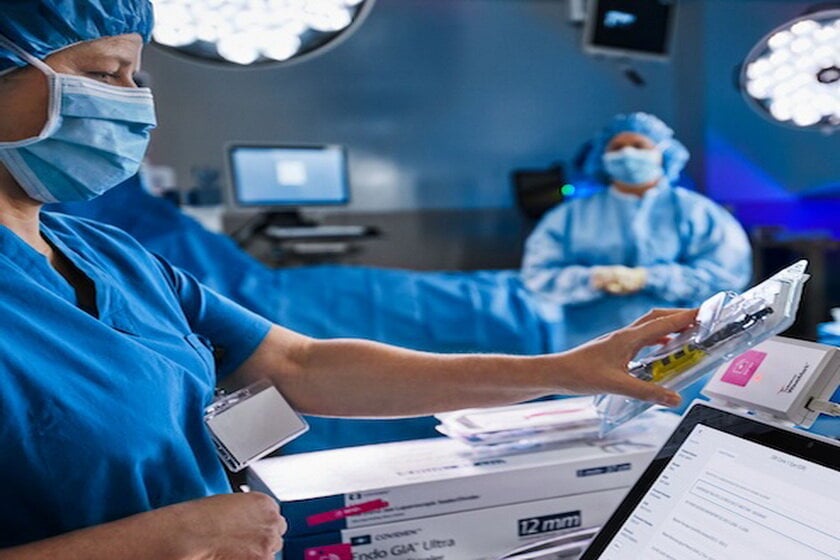
Technology is transforming healthcare and hospitals as innovations are revolutionizing surgical procedures, medical devices and diagnostics. Yet, even in this high-tech environment, hospital staff are managing medical supply inventory by counting items and tracking product availability with a spiral-bound notebook, sticky notes and spreadsheets. A recent Cardinal Health survey of hospital staff and decision makers found that nearly one in four health systems still rely on manual processes to maintain and reorder supplies to support patient care.
Supplies represent the second largest expenditure for hospitals after labor costs. According to the American Hospital Association, in 2023, hospitals spent nearly $147 billion on medical supplies, an increase of 4.7% over the previous year, with supply expenditures expected to grow. Locally, a regional health system may purchase up to 60,000 unique products annually, some of which may be duplicative or unnecessary, according to a McKinsey & Company article.
The operating room – while responsible for nearly 70% of a hospital’s revenue – also accounts for much of the health system waste. In fact, 13% of surgical supply costs can be attributed to wasted supplies.
The manual processes hospitals are using to track supplies are labor intensive, time consuming and lack accurate data to help drive decision making. Products may be over- and under-ordered, causing inefficiencies and waste and that can lead to a breakdown in communication and trust between clinicians and supply chain teams. All of these are factors that can impact patient care.
Enter Cardinal Health™ WaveMark™ Solutions
WaveMark is a digitally automated supply chain solution that can be integrated into a health system’s existing IT infrastructure (INTEGRIS Health has been a WaveMark customer since 2018). The solution links the use of a medical supply (such as a pacemaker, screw or commodity item) to the patient’s electronic medical record at the moment of care, which automates the hospital’s product inventory management.
WaveMark uses barcode and radio-frequency identification (RFID) technology, via mobile readers or RFID-enabled cabinets powered by proprietary WaveMark IntelliWave Technology, which helps health systems track supplies across their departments. This makes it easy to perform quick product counts and locate inventory, even for missing, expired or recalled items.
WaveMark Solutions’ advanced analytics portfolio, driven by AI and smart algorithms, gives health systems a comprehensive view of inventory across all sites, and can drill down to specific departments and products. The predictive analytics help enhance hospital decision-making by delivering real-time insights and recommendations based on current supply levels.
Inaccurate or missing product inventory impacts patient care
When hospital staff find themselves without critical medical supplies, it’s the patients who are impacted. According to results of an industry survey of nurses, physicians, service-line leaders and supply chain administrators conducted by the Deloitte Center for Health Solutions, 57% of frontline care respondents could recall a time when a physician didn’t have the products required for a patient’s procedure. The result is delayed or even canceled procedures. Research conducted by Cardinal Health found that a staggering 40% of healthcare providers have had to cancel a surgery because a critical medical supply was not available.
Such over-ordering can lead to excess inventory and the potential use of expired or recalled items. WaveMark technology can analyze product usage data to recommend periodic automatic replacement (PAR) levels. When inventory dips below set levels, the system triggers a replenishment order, enabling consistent product availability and peace of mind for staff.
The WaveMark Moment of Care™ System
In addition to obtaining medical products from hospital supply inventory, clinicians must accurately document the use of each product in patient records. When done manually, this means entering long product identifier codes in the hospital’s electronic health record (EHR).
The WaveMark Moment of Care System, a solution for operating rooms and catheterization (cath) labs, integrates into a health system’s EHR and provides seamless documentation of a product when scanned via RFID reader at the point of care. This eliminates the need to manually enter product codes – and the possibility of errors.
Thanks to the WaveMark Moment of Care System and its ease of use, Memorial Hermann Health System achieved a near-perfect documentation rate over a 12-month period, Pollard remarked.
The solution is also integrated into the hospital materials management information system (MMIS), meaning the product scan automatically deducts it from current inventory. This maintains a real-time view of remaining supplies, so supply chain team members can take a more proactive and efficient approach to product ordering.
Reducing waste and improving financial performance
With WaveMark, hospitals are able to base purchase decisions on actual use data. Customers leveraging Cardinal Health WaveMark Solutions have been able to reduce supply inventory carrying costs by an average of 26% and experience a wasted product rate of less than 1%, significantly better than the industry average, thereby strengthening their bottom line.
INTEGRIS Health’s Ziehme explained how WaveMark has supported a continuous financial improvement program for his health system, a joint effort between supply chain and clinical teams to discover and realize cost savings.
After adopting a clinically integrated supply chain with WaveMark Solutions, INTEGRIS Health realized more than $16 million in total annual savings, including $2.9 million from reduced expirations and $13.2 million from waste reduction, as reported in Cardinal Health case study.
www.cardinalhealth.com

