
www.medical-devices.tech
22
'26
Written on Modified on
Computational Protein Design & Adaptive Oncology Computing Architectures
NVIDIA and research institutions introduce RFD4-Proteina and agentic computing workflows to address biological search spaces and adaptive radiation therapy.
www.nvidia.com
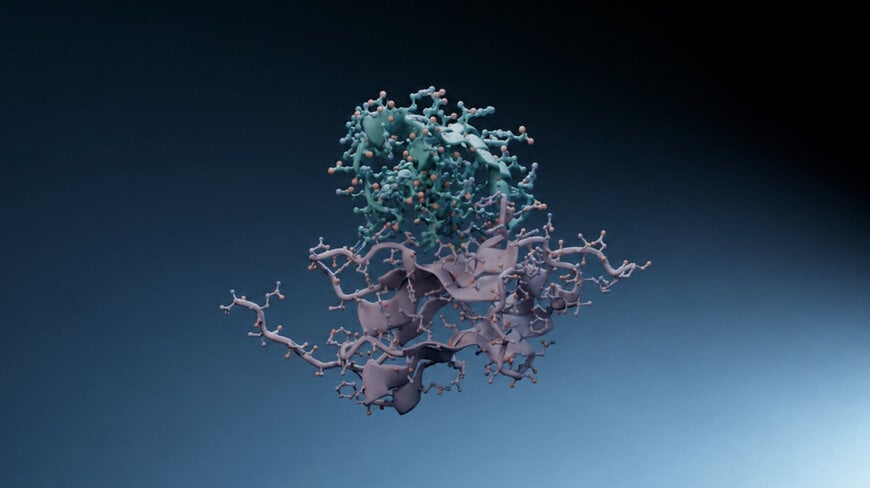
Modern biopharmaceutical research and oncology engineering face fundamental computational scaling limits when exploring vast combinatorial molecular configurations or recalculating clinical radiotherapy dosages during treatment sessions. Solving these challenges requires unifying generative biomolecular modeling with high-throughput inference frameworks and closing the loop between in silico hypotheses and automated physical laboratories.
At GTC Berlin, NVIDIA detailed multiple technical collaborations spanning molecular biology, autonomous laboratory systems, and clinical oncology, centered on the release of the RFD4-Proteina open generative model and real-time medical computing platforms. The company showcased how its BioNeMo development framework, Nemotron foundation models, and Holoscan streaming platform integrate with enterprise research pipelines to accelerate de novo biologic generation and enable continuous adaptive radiotherapy.
Generative Flow-Matching Architecture for De Novo Protein Design
Engineered therapeutic proteins, catalytic enzymes, and targeted diagnostics require functional tertiary structures capable of precise atomic binding. Traditional computational approaches often rely on disconnected two-stage pipelines: backbone scaffold generation followed by separate inverse folding sequence design, which frequently leads to low experimental hit rates due to steric clashes and suboptimal sidechain packing.
Developed jointly with the University of Washington Medicine Institute for Protein Design, RFD4-Proteina operates as an open generative model within the NVIDIA BioNeMo ecosystem. The system couples programmable structural design directly with inference-time search heuristics. Rather than performing separate backbone and sequence sampling, the model applies continuous latent flow-matching mechanics to co-design amino acid sequences and all-atom spatial coordinates simultaneously.
The model architecture allows research teams to guide sampling using explicit molecular boundary conditions, including catalytic triad coordinates, target interface constraints, pocket volumes, and multi-objective scoring functions. Across four computational benchmark suites—protein-protein binder design, small-molecule ligand binding, catalytic enzyme scaffolding, and DNA target binding—RFD4-Proteina demonstrated higher computational design pass rates and generation throughput than previous baseline pipelines. The model is released across deployment platforms including Amazon Bio Discovery, Anthropic, Benchling, Databricks, Google Cloud, Hugging Face, Nebius, OpenAI, and Tamarind Bio.
Agentic Integration Across Autonomous Laboratory Workflows
Translating generative biomolecular outputs into validated physical compounds requires closing the cycle between computational modeling and automated wet-lab validation. Integrating scientific reasoning models with laboratory equipment removes manual transcription bottlenecks and standardizes design-build-test-learn pipelines.
Industrial software and hardware providers are deploying NVIDIA BioNeMo and Nemotron foundation models to support agentic orchestration:
- Benchling integrates scientific reasoning agents within its electronic lab notebook infrastructure, connecting experimental history directly to molecular candidate selection.
- Biolevate links biological databases with domain-specific reasoning tools to evaluate candidate viability across early discovery phases.
- Boltz provides deep learning models for biomolecular complex prediction and is evaluating workflow agents that select analytical models and interpret structural outputs to direct successive experiment designs.
- Automata interfaces AI agents with physical automation workcells, translating computational protocols into robotic liquid handling operations while capturing structured assay metrics.
- Genedata and Danaher incorporate RFD4-Proteina into an autonomous protein design foundry, where an AI co-scientist coordinates candidate generation and evaluates physical binding data to refine sequential generative iterations.
- Therna Biosciences applies foundation model reasoning to align experimental RNA assay feedback with targeted oligonucleotide sequence generation.
- Hologen combines large clinical models with Nemotron to extract prognostic correlations from imaging and patient registries for oncology trial stratification.
Real-Time Adaptive Radiotherapy and Clinical Digital Twins
Clinical oncology faces severe computational constraints during external beam radiotherapy. Because internal anatomical geometry changes across fractionated treatment sessions due to tumor regression, organ filling, and respiratory motion, delivering prescribed radiation doses without damaging adjacent organs-at-risk requires continuous replanning. Conventional offline replanning workflows require days, forcing clinicians to use static margins rather than adapting daily.
Siemens Healthineers is collaborating with NVIDIA to develop adaptive radiotherapy platforms driven by real-time agentic co-planning, physical simulation, and robotic beam alignment. The system architecture leverages NVIDIA Nemotron models to parse multi-modal diagnostic imaging and propose individualized field configurations. These treatment candidates feed directly into CUDA-accelerated Monte Carlo dose calculation engines that evaluate volumetric tissue absorption in seconds.
The workflow integrates the NVIDIA Holoscan edge computing framework, which processes real-time sensor streams and multi-axis imaging arrays with deterministic low latency. This architecture connects live patient positioning telemetry to robotic linear accelerators, aligning beam delivery to anatomical shifts in real time.
Complementing specialized oncology workflows, regional healthcare technology providers are deploying foundation models for operational efficiency. Avelios, Corti, Dedalus, Dawn Health, and Sword deploy Nemotron models for clinical summarization and decision support. PolyAI operates multilingual dialog pipelines across the Corilus network in Belgium and France, while Apian and VitVio utilize NVIDIA Cosmos world models and Omniverse simulation libraries to construct digital twins that model operational facility logistics.
Additional Context:
This section details technical specifications and competitive benchmarking not included in the original product announcement.
Generative biomolecular modeling has evolved from discrete diffusion approaches toward unified latent flow-matching architectures. Early structural diffusion models, such as RFdiffusion (Watson et al., 2023), focused strictly on generating alpha-carbon backbones, requiring secondary passes through tools like ProteinMPNN for sequence design and AlphaFold2 for structural validation, which resulted in significant compute overhead and lower end-to-end design yields.
RFD4-Proteina implements a total parameter footprint of 4.34 × 10⁸ parameters, split between a 1.78 × 10⁸ parameter flow-matching trunk and a 2.56 × 10⁸ parameter paired structural autoencoder. Operating across sequence lengths up to 1,024 tokens, the model processes annotated mmCIF coordinate structures alongside condition specifications. In standardized computational benchmark evaluations measuring unclustered binder generation pass rates (defined by target AlphaFold3 evaluation filters requiring binder pTM ≥ 0.80, interface PAE ≤ 1.5 Å, and backbone RMSD ≤ 2.5 Å), RFD4-Proteina achieves a pass rate between 7.7% and 10.6% at a throughput of 66.5 to 78.0 designs per GPU-hour.
This computational throughput compares to established alternative frameworks:
- BindCraft implements an automated single-backbone pipeline utilizing target conditioning but relies on iterative gradient-based hallucination and external sequence design steps, yielding pass rates between 4.8% and 5.9% with throughput limited to 2.0 to 2.3 designs per GPU-hour.
- RFdiffusion3 generates full all-atom coordinates within an iterative diffusion process, attaining a 1.9% benchmark pass rate at an average throughput of 9.6 designs per GPU-hour.
- First-generation RFdiffusion coupled with ProteinMPNN achieves a 0.8% pass rate under equivalent AlphaFold3 evaluation thresholds, processing approximately 0.9 designs per GPU-hour.
By shifting intermediate trajectory integration into a compressed latent space via the paired autoencoder, RFD4-Proteina reduces sampling step complexity while executing joint sequence-structure generation at roughly an order of magnitude higher throughput than multi-stage diffusion pipelines.
Edited by Natania Lyngdoh, Induportals editor, with AI assistance.
www.nvidia.com
Edited by Natania Lyngdoh, Induportals editor, with AI assistance.
www.nvidia.com

