
www.medical-devices.tech
21
'26
Written on Modified on
Advanced Fluid Control and Shielding Systems for Medical Devices
Parker Hannifin demonstrates customizable filtration, precision fluidics, and electromagnetic sealing technologies to scale healthcare equipment from prototyping to manufacturing.
www.parker.com
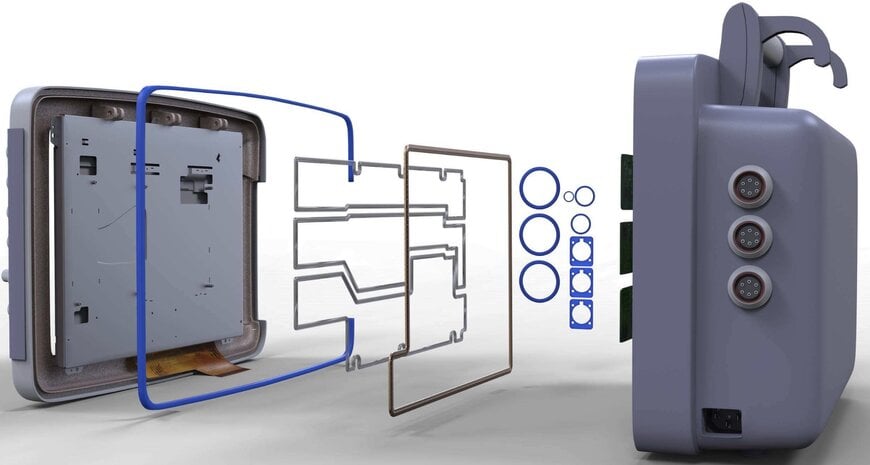
Parker Hannifin is showcasing its latest miniature fluidic, filtration, and electromagnetic shielding technologies tailored for medical device engineering and diagnostic equipment. These customized components address the strict regulatory and scaling requirements of the healthcare, biopharmaceutical, and drug delivery industries by ensuring precision and long-term reliability in clinical environments.
Filtration Mechanisms for Bioburden Reduction
The manufacturer is presenting sterile air and liquid filtration systems engineered for pharmaceutical settings at COMPAMED 2026 in Düsseldorf (16 to 19 November 2026, Hall 8a, Booth H13). The technical lineup includes autoclave vent filters that supply sterile air to neutralize vacuum pressure inside autoclave chambers. Additionally, the DEMICAP and MURUS filter units facilitate fluid clarification, bioburden reduction, and terminal sterilization. For facility-level pathogen management, point-of-use shower and handwashing filters provide validated microbial control for continuous installation periods of up to 62 days.
Electromagnetic Shielding and Thermal Management
Medical diagnostics and imaging equipment require rigorous protection against electromagnetic interference (EMI) and thermal overload. To address this, the company supplies Polytetrafluoroethylene (PTFE) and elastomer sealing solutions that maintain chemical resistance, media purity, and low friction. The portfolio incorporates thermal interface materials—including gap fillers, thermal pads, and greases—to ensure effective heat dissipation in compact analytical instruments. Conductive elastomer gaskets, alongside electrically conductive plastics and coatings, provide both environmental sealing against disinfectants and EMI shielding for sensitive electronic assemblies and patient monitoring systems.
Miniature Fluid Control Systems
For applications requiring high-precision air, gas, and liquid regulation, the precision fluidics division has developed scalable miniature valves and pumps. The hardware selection features the LowPro HF miniature proportional valve, the C7, C15, and C21 miniature cartridge solenoid valves, and the EPiC digital electronic pressure controller. Furthermore, the company integrates micro diaphragm pumps, including the BTX, CTS, T2-05, and the forthcoming LTX liquid diaphragm pump, which are structured to support scalable performance. Over 80 percent of these integrated solutions are custom-engineered to meet specific operational parameters. Mario Müller, Market Sales Leader for Medical and Diagnostic at Parker Hannifin, noted that the engineering focus remains on ensuring that components selected during the initial conceptual phase maintain their required performance metrics and regulatory compliance when clients shift to full-scale automated production.
Additional Context
This section details technical specifications and competitive benchmarking not included in the original news release.
Within the miniature fluidics and medical component market, OEMs evaluate pneumatic and liquid control systems based on response time, leak rates, and power consumption. Parker’s miniature proportional and cartridge solenoid valves compete directly with fluid control architectures from manufacturers such as The Lee Company and Bürkert. While standard solenoid valves often require substantial power and generate excess heat that can degrade sensitive diagnostic reagents, miniature cartridge designs prioritize low-wattage operation and minimal internal dead volume. Furthermore, in the micro diaphragm pump sector, Parker’s BTX and CTS lines operate in the same class as KNF Neuberger’s micro gas and liquid pumps, where the primary benchmarking criteria involve flow-to-size ratios, the chemical inertness of wetted materials, and continuous maintenance-free operating hours in clinical analyzer applications.
Edited by Aishwarya Mambet, Induportals Editor, with AI assistance.
www.parker.com

