
www.medical-devices.tech
14
'26
Written on Modified on
Siemens Healthineers shifts ultrasound focus toward image-guided cardiovascular procedures
The company will discontinue general imaging ultrasound sales, prioritizing cardiovascular interventions, intracardiac echocardiography, software and AI.
www.siemens-healthineers.com
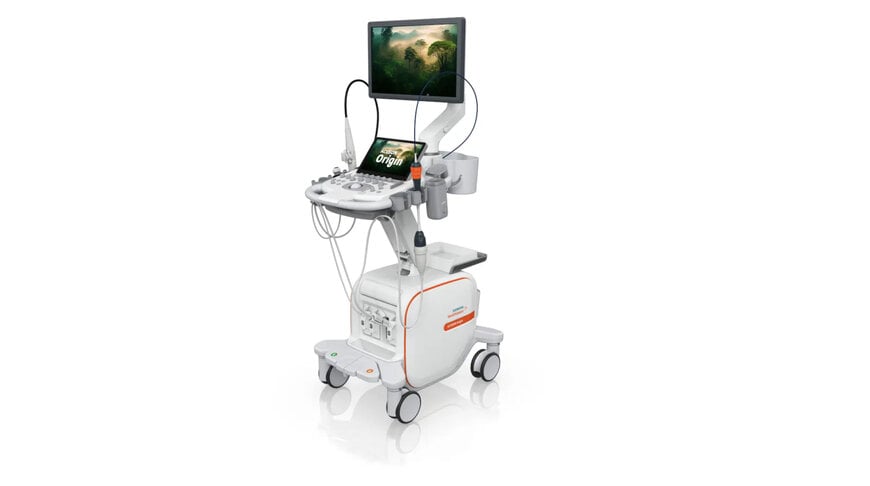
Minimally invasive cardiovascular interventions require high-precision, real-time soft tissue visualization within dynamic intracardiac spaces where conventional surface scanning proves insufficient. Siemens Healthineers has restructured its ultrasound business unit to dedicate engineering and capital resources exclusively to procedural imaging and image-guided therapy, discontinuing commercial sales of general imaging platforms as of October 12, 2026, to prioritize interventional cardiology and electrophysiology workflows.
Clinical Requirements in Catheter-Based Cardiovascular Interventions
Structural heart procedures and electrophysiology mapping demand continuous, high-resolution visualization of internal cardiac architecture without obstructing fluoroscopic angles or compromising patient hemodynamics. Transesophageal echocardiography has historically provided high-resolution intraprocedural guidance, yet it routinely requires general anesthesia, endotracheal intubation, and an additional dedicated imaging physician.
To overcome these workflow bottlenecks, catheter-based visualization utilizes intracardiac echocardiography inserted directly via the femoral vein into the right atrium. This architecture provides direct, near-field acoustic views of the interatrial septum, left atrial appendage, and cardiac valves. Because intracardiac echocardiography operates inside the bloodstream, transducer arrays must balance aggressive acoustic output constraints with strict thermal dissipation thresholds, preventing localized blood heating while delivering adequate penetration and frame rates.
Procedural Ultrasound Architecture and Artificial Intelligence Integration
The targeted procedural imaging portfolio integrates the Acuson Origin cardiovascular console, the portable P500 platform configured for intracardiac imaging, and the Freestyle wireless transducer architecture. The flagship Acuson Origin platform operates digital beamforming hardware engineered to drive high-channel-count matrix array probes alongside two-dimensional and real-time four-dimensional intracardiac catheters.
These consoles execute deep learning algorithms trained on cardiac acoustic libraries to automate anatomical feature recognition, chamber volume tracking, and Doppler sample placement. Automated Doppler alignment eliminates manual cursor adjustments during critical procedural stages, allowing interventional teams to assess hemodynamic gradients, paravalvular regurgitation, and tissue apposition in real time. Software interfaces are customized for catheterization laboratories, integrating multi-planar reconstruction views directly with therapeutic catheter tracking to coordinate device navigation and transseptal puncture verification.
Product Line Realignment and Installed Base Transition
Under this operating realignment, Siemens Healthineers ceased new sales of general imaging systems on October 12, 2026, phasing out the Acuson Sequoia, Redwood, Juniper, and Maple product lines. The organization is consolidating manufacturing and research programs around specialized procedural consoles, dedicated interventional software releases, and single-use intracardiac echocardiography catheter assemblies.
The manufacturer maintains long-term service agreements, regulatory compliance coverage, maintenance contracts, software maintenance distributions, and replacement transducer supply for the worldwide installed base of discontinued general imaging scanners over their operating lifecycles.
Additional Context:
This section details technical specifications and competitive benchmarking not included in the original product announcement.
Intracardiac echocardiography instrumentation operates in an established competitive landscape alongside platforms such as GE HealthCare Vivid systems coupled with SoundStar catheters, Philips Healthcare EPIQ CVx platforms running VeriSight 3D intracardiac catheters, Abbott ViewFlex Xtra diagnostic catheters, and Johnson and Johnson MedTech Biosense Webster CartoSound integration.
Technical differentiation in procedural imaging centers on catheter array technology, shaft maneuverability, and acoustic volume rates. Standard two-dimensional intracardiac catheters utilize 64-element to 128-element linear phased arrays housed within 8-French to 10-French shafts, operating across 4.5 megahertz to 10 megahertz frequency windows. Advanced volumetric four-dimensional catheters, such as the AcuNav Lumos and Philips VeriSight 3D, integrate miniaturized two-dimensional matrix arrays with up to 800 to 1,000 active acoustic channels, executing real-time volume rendering without mechanical array rotation.
Volumetric imaging within a disposable catheter format requires multi-directional articulation across four distinct planes (anterior, posterior, left, and right deflection) to position the acoustic window adjacent to the fossa ovalis or mitral annulus. Regulatory standards governing blood-contacting ultrasound transducers enforce strict surface temperature limitations under IEC 60601-2-37, capping catheter surface heating at 43 degrees Celsius to mitigate thermal coagulation risks during prolonged electrophysiology ablation and transcatheter edge-to-edge repair procedures.
Edited by Natania Lyngdoh, Induportals editor, with AI assistance.
www.siemens-healthineers.com

