
www.medical-devices.tech
29
'26
Written on Modified on
Robotic-Assisted Bronchoscopy Expands Precision Lung Nodule Biopsy Capabilities
Johnson & Johnson introduced its robotic bronchoscopy and AI navigation platform at Cleveland Clinic Abu Dhabi to improve early diagnostic accuracy for peripheral lung lesions.
www.jnjmedtech.com
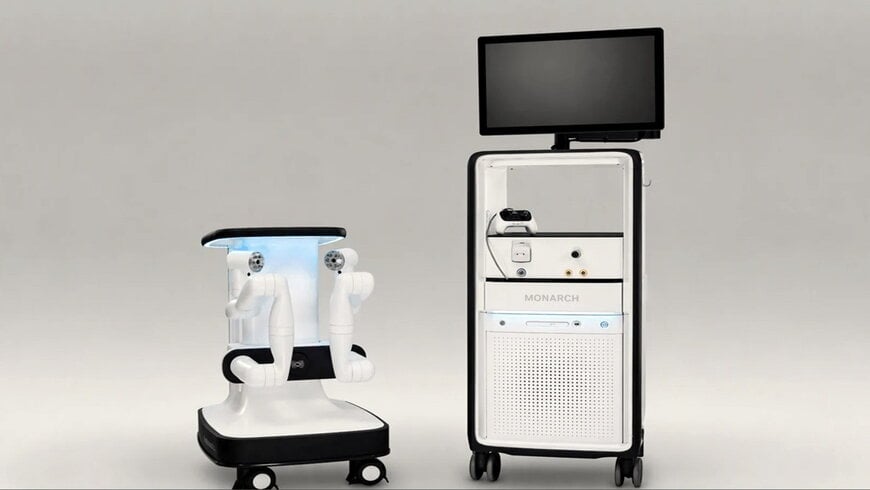
Johnson & Johnson collaborated with Cleveland Clinic Abu Dhabi in the United Arab Emirates to deploy a robotic-assisted bronchoscopy platform and AI-driven navigation system for interventional pulmonology procedures. The technology enables minimally invasive diagnostic sampling of peripheral lung nodules in patients evaluated for suspected early-stage pulmonary malignancies.
Diagnostic Precision for Peripheral Pulmonary Lesions
Lung cancer diagnosis at early stages improves survival rates substantially, with five-year survival reaching up to 90 percent when detected early, compared to under 10 percent when identified at advanced stages. Approximately half of early-stage lesions reside in the outer periphery of the lung parenchyma, where traditional manual bronchoscopy encounters physical reach limitations.
The robotic platform employs a scope-in-sheath architecture and continuous direct vision, allowing operators to navigate complex anatomical airways into outer lung segments. By facilitating access and biopsy of small nodules across all pulmonary segments, the system aims to accelerate definitive diagnostic pathways and clinical decision-making.
Dr. Zaid Zoumot, Interventional Pulmonologist and Division Chair of Pulmonary Medicine at Cleveland Clinic Abu Dhabi, noted that robotic assistance enables clinicians to reach small lesions in all lung segments, creating opportunities to accelerate treatment decisions.
AI Integration and Navigation Capabilities
The platform integrates an artificial intelligence software module designed to process intraprocedural three-dimensional imaging data. This software connects preoperative planning with real-time navigational algorithms and compatible mobile or fixed advanced fluoroscopy systems to enhance targeting accuracy during nodule biopsy procedures.
Furthermore, the technology connects to a broader digital ecosystem that integrates intraoperative data across surgical software and robotic platforms. Standard diagnostic and therapeutic indications encompass bronchoscopic visualization and tissue access within patient airways. Clinical considerations include potential complications common to bronchoscopic interventions, such as pneumothorax, low blood oxygen, localized bleeding, bronchial spasm, respiratory failure, or cardiac arrhythmia.
Additional Context
This section details technical specifications and competitive benchmarking not included in the original product announcement.
Robotic bronchoscopy systems primarily compete between two architectural paradigms: mechanical scope-in-sheath actuation with direct optical visualization and shape-sensing fiber-optic catheters. The mechanical scope-in-sheath design utilizes an outer sheath for stability combined with an inner scope capable of independent articulation and direct video transmission throughout navigation. In contrast, alternative market solutions rely on shape-sensing optical fibers within fully flexible catheter systems without direct optics during distal advancement, requiring secondary optical or fluoroscopic verification.
Both approaches integrate with intraprocedural cone-beam computed tomography (CBCT) and augmented fluoroscopy to overcome CT-to-body divergence, where tissue movement during respiration shifts real-time nodule locations away from preoperative CT scans. Benchmark parameters in interventional pulmonology center on diagnostic yield in peripheral nodules under two centimeters, anatomical reach, direct optical visualization capabilities, and pneumothorax incidence rates.
Edited by Evgeny Churilov, Induportals Media - Adapted by AI.
www.jnjmedtech.com

