
www.medical-devices.tech
01
'26
Written on Modified on
Agilent Technologies Launches New GC Systems Equipped With GC Assist
These advanced intelligent instruments enhance performance and gas chromatography productivity by enabling system monitoring, step-by-step troubleshooting, and remote connectivity to reduce laboratory downtime.
www.agilent.com
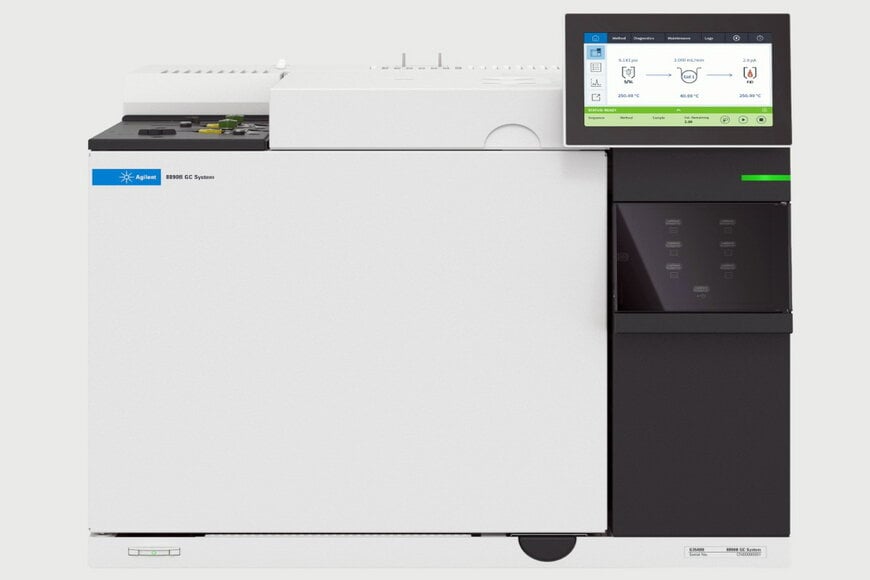
Agilent Technologies Inc. has launched the 8890B and 8860B gas chromatography systems integrated with GC Assist, an advanced instrument intelligence software platform. This technical solution incorporates real-time system monitoring, automated troubleshooting algorithms, and secure remote network connectivity to improve analytical data quality across chemical, pharmaceutical, environmental, and food testing laboratories.
Enhanced Hardware Architecture and Sample Throughput Capabilities
The updated hardware platforms introduce specific physical and mechanical enhancements designed to optimize injection-to-injection cycle times and ease routine maintenance. The 8890B system features an expanded configuration capability that supports an additional detector position, allowing for up to four detectors simultaneously in valve configurations. This configuration flexibility accommodates highly complex multi-method workflows on a single analytical footprint. Furthermore, the 8890B incorporates an optimized oven cooling mechanism that achieves up to a 30% faster cooling rate compared to previous generations, directly accelerating sample turnaround times without altering established chromatographic method parameters. For standard workflows, the 8860B platform utilizes a dual simultaneous injection system, effectively doubling sample processing capacity per analytical run. Internal hardware visibility is enhanced by an integrated oven light, and routine maintenance procedures are supported by on-board, step-by-step instructional media displayed directly on the instrument interface to assist technical personnel.
Integrated Diagnostic Framework and Remote Monitoring Matrix
The core technical advancement of these systems relies on the GC Assist software framework, which acts as an embedded diagnostic layer within the laboratory network. The software continuously monitors critical operational parameters, including carrier gas flow rates, power consumption, and pressure metrics to detect early indicators of carrier gas leaks. By executing localized and remote diagnostic algorithms, the system automatically flags analytical results that deviate from predefined quality control limits. When an operational variance or maintenance threshold is reached, the platform generates automated notifications alongside step-by-step troubleshooting protocols. This proactive error detection minimizes unplanned instrument downtime and reduces the volume of sample reruns caused by undetected system drift or sub-optimal column conditions. The secure network interface allows laboratory managers to review instrument health and operational status from remote locations, ensuring compliance with data integrity and quality assurance standards across multi-instrument laboratories.
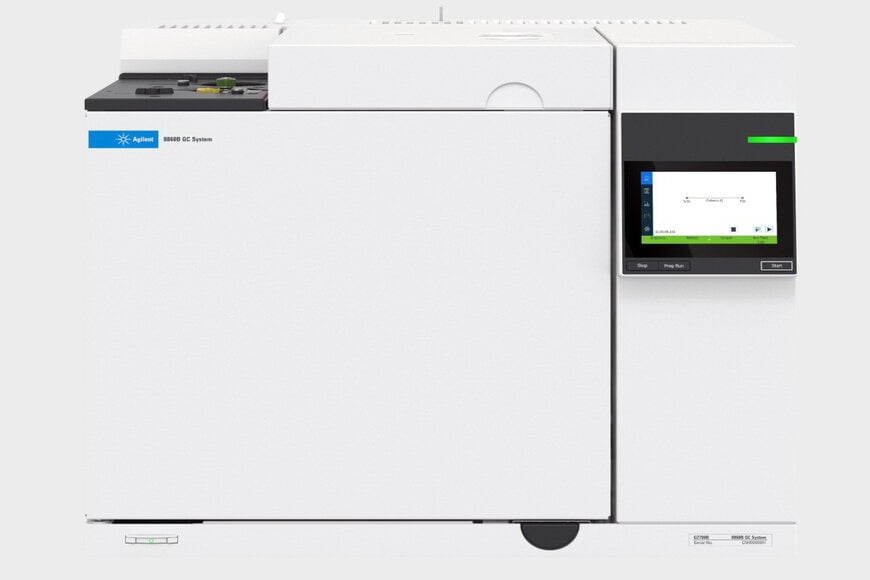
8860B GC System
Additional Context: Technical Specifications and Competitive Benchmarking
The 8890B and 8860B systems compete directly with other high-performance laboratory gas chromatographs, such as the Thermo Scientific Trace 1600 Series and the Shimadzu GC-2030. In comparative benchmarking, the integration of four detectors on a single 8890B platform represents a distinct hardware density advantage over standard three-detector limits found in many conventional systems, reducing the need for multiple dedicated instruments in complex gas analysis. Additionally, while competitive platforms utilize external software plugins or workstation-based diagnostics for system monitoring, the GC Assist architecture embeds these diagnostic capabilities directly onto the instrument firmware. This allows for edge-computing data evaluation that functions independently of the central chromatography data system. The verified 30% increase in oven cooling velocity matches or exceeds standard high-throughput configurations in the industry, lowering the thermal cycle overhead and maximizing the utilization rate of automated liquid samplers during continuous 24-hour testing cycles.
Edited by Evgeny Churilov, Induportals Media - Adapted by AI.
www.agilent.com

