
www.medical-devices.tech
28
'26
Written on Modified on
LC-HRMS Workflow Supports Biopharma QC Testing
Agilent Technologies introduces a multi-attribute method workflow for regulated biopharmaceutical quality control laboratories.
www.agilent.com
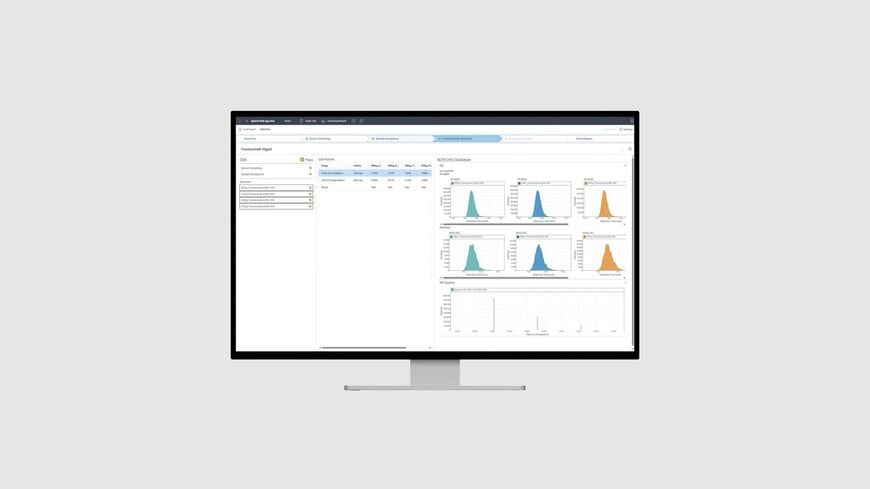
Agilent Technologies Inc. has introduced a multi-attribute method (MAM) workflow intended for pharmaceutical and biopharmaceutical quality control laboratories implementing liquid chromatography high-resolution mass spectrometry (LC/HRMS) in regulated testing environments. The solution combines instrumentation, software, columns, consumables and analytical standards into a unified workflow designed to support routine monitoring of biologic product quality attributes.
The workflow targets quality control operations involved in late-stage biologic development and commercial manufacturing, where laboratories are managing increasingly complex therapeutic modalities such as antibody-drug conjugates, fusion proteins and gene therapies. These products often require simultaneous monitoring of multiple critical quality attributes, increasing demand for analytical methods capable of consolidating several measurements into a single workflow.
LC/HRMS Integration for Regulated Manufacturing
The Agilent MAM workflow is designed to address operational barriers that have historically limited broader adoption of LC/HRMS in quality control laboratories. Conventional QC environments often rely on multiple orthogonal analytical methods to assess biologic product quality, increasing method complexity, training requirements and data management demands.
The workflow integrates with OpenLab CDS to support method transfer from research and development into manufacturing environments. Agilent stated that the system streamlines data acquisition, analysis and reporting processes while maintaining compatibility with established QC laboratory operations.
The adoption of MAM workflows has increased as regulatory expectations surrounding biologics characterization continue to evolve. United States Pharmacopeia chapter <1060> outlines implementation considerations for LC/HRMS-based MAM workflows, including analytical performance, validation and data integrity requirements for regulated use.
Critical Quality Attribute Monitoring in Biologics Production
MAM workflows are increasingly being evaluated as alternatives to multiple conventional analytical assays because they can monitor several product quality indicators simultaneously. In biologics manufacturing, critical quality attributes can include glycosylation patterns, oxidation, deamidation, charge variants and product heterogeneity.
Using LC/HRMS-based analysis, laboratories can consolidate measurements traditionally performed through separate chromatographic or biochemical assays. This can reduce analytical redundancy while supporting batch release and ongoing manufacturing control.
Simon May, senior vice president of Agilent’s Life Sciences and Diagnostics Group, said QC laboratories are under pressure to manage increasingly complex biologic products while maintaining compliance and operational consistency. He added that the workflow was developed to support adoption of advanced analytical methods within regulated QC environments.
Angelica Riemann, senior vice president of the Agilent CrossLab Group, stated that the workflow is intended to help laboratories integrate advanced analytical capabilities into existing QC processes without disrupting established operational procedures.
Advanced Therapeutic Modalities Increase MAM Demand
The growing use of advanced therapeutic modalities is increasing demand for analytical workflows capable of higher-throughput characterization and routine quality monitoring. Antibody-drug conjugates and fusion proteins often require monitoring of multiple molecular attributes during manufacturing to ensure lot-to-lot consistency.
MAM approaches using LC/HRMS are increasingly being incorporated into biopharma quality control modernization strategies. By combining several assays into a single analytical platform, manufacturers can reduce workflow fragmentation and improve analytical oversight across development and commercial production stages.
Agilent stated that the MAM workflow is available globally for pharmaceutical and biopharmaceutical manufacturers implementing LC/HRMS-based quality control strategies in regulated environments.
Additional Context
This section details technical specifications and competitive benchmarking not included in the original product announcement
Comparable MAM workflows in the biopharmaceutical QC market include Thermo Fisher Scientific’s Orbitrap-based BioPharma Finder platform, Waters Corporation’s BioAccord LC-MS System and SCIEX’s X500 QTOF-based biotherapeutic analysis workflows. These systems similarly support peptide mapping and monitoring of critical quality attributes in biologics manufacturing.
Compared with compact LC-MS systems such as the Waters BioAccord, Agilent’s workflow emphasizes integration into existing OpenLab CDS-based QC environments to support method transfer between development and manufacturing. Orbitrap-based systems from Thermo Fisher Scientific typically offer higher resolving power exceeding 100,000 FWHM for detailed structural characterization, while QTOF-based workflows from Agilent and SCIEX are commonly used for faster peptide mapping and routine attribute monitoring in regulated laboratory operations.
Edited by Natania Lyngdoh, Induportals Editor, with AI assistance.
www.agilent.com

