
www.medical-devices.tech
28
'26
Written on Modified on
Mindray & Hospital Germans Trias deploy connected ICU system
Integrated patient monitoring system improves clinical workflows, data visibility, and decision-making in high-demand critical care environments.
www.mindray.com
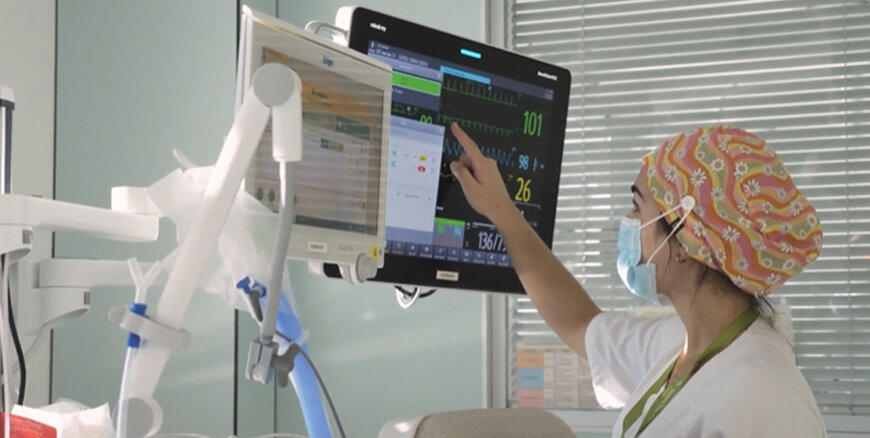
The intensive care unit at Hospital Germans Trias i Pujol implemented a connected patient monitoring system in cooperation with Mindray to centralize clinical data, improve workflow efficiency, and support decision-making in high-demand critical care environments.
Addressing ICU capacity and data fragmentation
Hospital Germans Trias i Pujol operates as a tertiary care center serving up to 1.5 million inhabitants, with intensive care services facing increasing patient volumes and higher case complexity. Clinical teams previously relied on multiple standalone devices and information systems, requiring manual consolidation of patient data. This fragmented structure increased response time and cognitive workload, particularly in environments with limited staffing resources.
The cooperation with Mindray was initiated to address these constraints through a unified digital infrastructure capable of supporting continuous monitoring and faster clinical decision-making.
Integrated monitoring architecture and system design
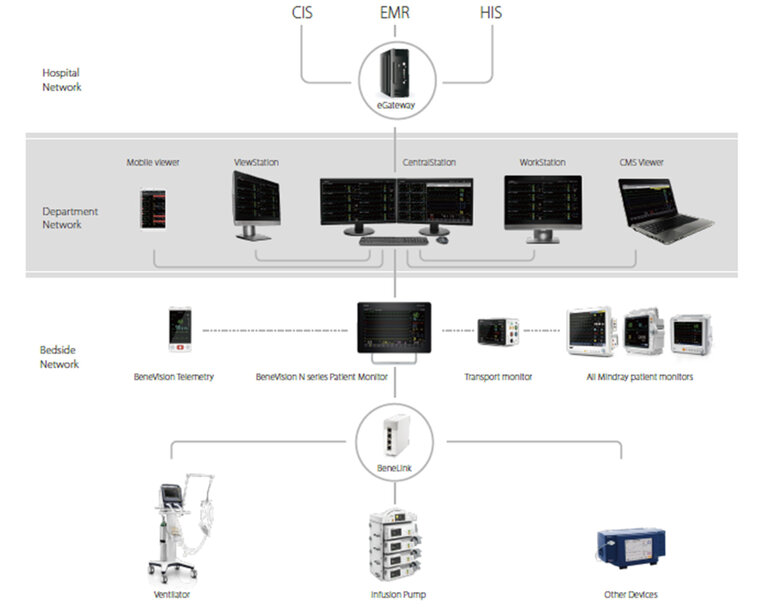
The deployed solution is based on a connected patient monitoring system that aggregates physiological data from bedside devices into a centralized platform. The system operates as a clinical data hub, synchronizing parameters such as heart rate, oxygen saturation, and blood pressure through standardized communication interfaces.
Mindray provided the monitoring hardware, software platform, and interoperability framework. Hospital Germans Trias i Pujol defined clinical requirements and workflow integration, ensuring alignment with ICU operational practices.
The architecture supports continuous data exchange between devices, reducing manual transcription and enabling consistent visualization. Patient-specific configurations allow individualized monitoring thresholds, improving alarm relevance by limiting non-critical alerts.
Deployment within existing ICU infrastructure
Implementation was carried out as part of a broader ICU modernization program. Existing medical devices were connected to the central platform, and data exchange protocols were configured to ensure interoperability. Biomedical engineering teams supervised system validation and integration, while clinical staff adapted workflows to incorporate centralized monitoring and cross-patient visibility.
Networked access to patient data enables clinicians to retrieve information from multiple locations within the ICU, supporting coordinated care in distributed unit layouts.
Clinical applications in critical care environments
The system is designed for continuous monitoring scenarios where rapid detection of physiological changes is required. Centralized dashboards provide real-time visibility of multiple patients, while automated alerting mechanisms support early identification of deviations in vital parameters.
This structure allows clinicians to act on consolidated, time-synchronized data, reducing delays associated with fragmented information sources. Cross-patient monitoring also enables nursing staff to maintain situational awareness beyond assigned beds.
Operational impact and system scalability
From an operational perspective, the system reduces manual data handling and minimizes the risk of incomplete information transfer. Centralized visualization supports supervision of multiple patients, which is particularly relevant under staffing constraints.
Improved alarm management contributes to patient safety by prioritizing clinically significant events. The system architecture is scalable, allowing additional monitoring devices and data points to be integrated without major structural changes.
The cooperation between Hospital Germans Trias i Pujol and Mindray demonstrates how connected medical systems can align device interoperability with clinical workflows, supporting more stable and efficient critical care delivery.
Edited by Natania Lyngdoh, Induportals Editor — Adapted by AI.
www.mindray.com

