
www.medical-devices.tech
27
'26
Written on Modified on
Rapid Occlusion Balloon for SVC Tear Control
Philips introduces Bridge Plus to stabilize patients during transvenous lead extraction emergencies through rapid hemostasis and image-guided therapy integration.
www.philips.com
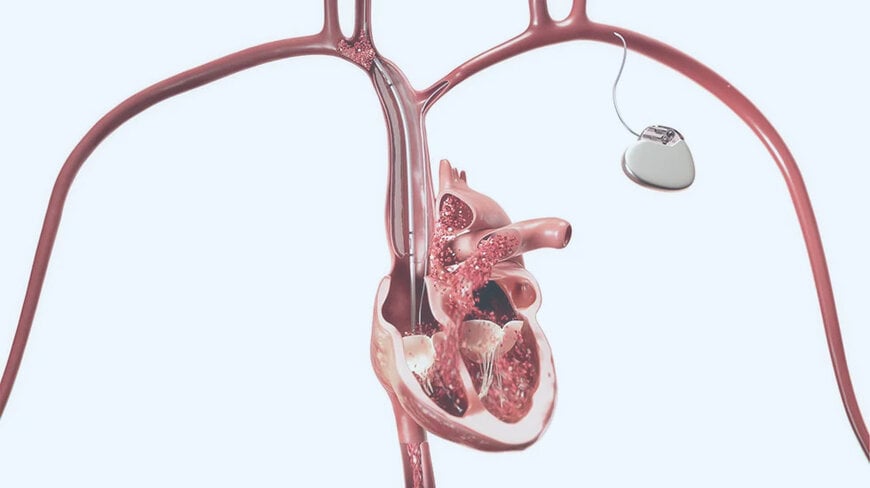
Philips has introduced the Bridge Plus Occlusion Balloon, a device designed to manage acute bleeding during rare superior vena cava (SVC) tears in transvenous lead extraction procedures, supporting emergency stabilization in cardiac electrophysiology.
Addressing a Critical Risk in Lead Extraction
Transvenous lead extraction (TLE) is routinely performed to remove malfunctioning or infected leads from cardiac implantable electronic devices such as pacemakers and defibrillators. While the procedure is widely considered safe, SVC tears remain a rare complication, occurring in fewer than 0.5% of cases. Despite their low incidence, these events require immediate intervention due to rapid blood loss and high mortality risk.
The Bridge Plus Occlusion Balloon has been developed specifically for this scenario, enabling temporary vascular occlusion to control hemorrhage. The system is designed to deploy in under two minutes, providing a rapid-response mechanism within the electrophysiology workflow. Clinical data indicate the device can reduce blood loss by up to 90% and maintain hemostasis for approximately 30 minutes, offering a critical window for surgical intervention.
Technical Design and Functional Mechanism
Bridge Plus builds on earlier occlusion balloon designs and incorporates features aimed at improving deployment accuracy and anatomical adaptability. The device is a low-pressure, compliant balloon equipped with radiopaque markers, allowing precise positioning under fluoroscopic guidance an essential requirement in image-guided therapy environments.
Its compatibility with a broad range of patient anatomies enables use across varied clinical scenarios. Additionally, the system supports staged deployment strategies, where the balloon is pre-positioned during procedures to reduce response time in emergencies. This aligns with the broader shift toward a digital supply chain in interventional cardiology, where preparedness and procedural standardization are increasingly emphasized.
Clinical Evidence and Outcome Improvements
Published clinical data underscore the importance of preparedness in managing SVC tears. Studies report that survival rates increased from 56.9% to 88.2% when an occlusion balloon was staged in advance and readily available during TLE procedures. This improvement highlights the role of pre-emptive device positioning in enhancing procedural safety.
The underlying technology platform has been used in more than 50,000 procedures in the United States, providing a substantial clinical usage base. Bridge Plus extends this platform with faster deployment and improved control of bleeding, addressing limitations observed in earlier emergency response approaches.
Application Context in Electrophysiology
The device is intended for use in electrophysiology labs performing lead management procedures. It supports clinicians in stabilizing patients during acute vascular complications, particularly when imaging access may be compromised during an emergency.
Use cases include:
- Emergency hemorrhage control during SVC rupture
- Prophylactic staging in high-risk TLE procedures
- Temporary stabilization prior to surgical repair
These applications contribute to safer procedural pathways and improved risk management in cardiac device extraction.
Availability and Industry Context
Bridge Plus is commercially available in the United States, with broader international availability expected following regulatory approvals. The technology was presented at the Heart Rhythm Society 2026 meeting in Chicago, reflecting its positioning within the evolving landscape of interventional cardiology devices.
Within the competitive landscape, occlusion balloons are a recognized solution for vascular control; however, differentiation is typically based on deployment time, hemostatic efficiency, and integration with procedural workflows. Bridge Plus emphasizes rapid deployment and extended hemostasis duration as key performance parameters.
Conclusion
The Bridge Plus Occlusion Balloon addresses a highly specific but critical complication in transvenous lead extraction. By combining rapid deployment, measurable blood loss reduction, and extended hemostasis, the technology provides electrophysiology teams with a structured emergency response tool. Its integration into procedural workflows supports improved preparedness and aligns with broader efforts to enhance safety in image-guided cardiac interventions.
Edited by an industrial journalist Sucithra Mani with AI assistance.
www.philips.com
Availability and Industry Context
Bridge Plus is commercially available in the United States, with broader international availability expected following regulatory approvals. The technology was presented at the Heart Rhythm Society 2026 meeting in Chicago, reflecting its positioning within the evolving landscape of interventional cardiology devices.
Within the competitive landscape, occlusion balloons are a recognized solution for vascular control; however, differentiation is typically based on deployment time, hemostatic efficiency, and integration with procedural workflows. Bridge Plus emphasizes rapid deployment and extended hemostasis duration as key performance parameters.
Conclusion
The Bridge Plus Occlusion Balloon addresses a highly specific but critical complication in transvenous lead extraction. By combining rapid deployment, measurable blood loss reduction, and extended hemostasis, the technology provides electrophysiology teams with a structured emergency response tool. Its integration into procedural workflows supports improved preparedness and aligns with broader efforts to enhance safety in image-guided cardiac interventions.
Edited by an industrial journalist Sucithra Mani with AI assistance.
www.philips.com

