
www.medical-devices.tech
14
'26
Written on Modified on
Modular automation advances factory digitalization
Syntegon presents integrated solutions at interpack 2026 to enable a digital supply chain and adaptive manufacturing in pharma, biotech, and food industries.
www.syntegon.com
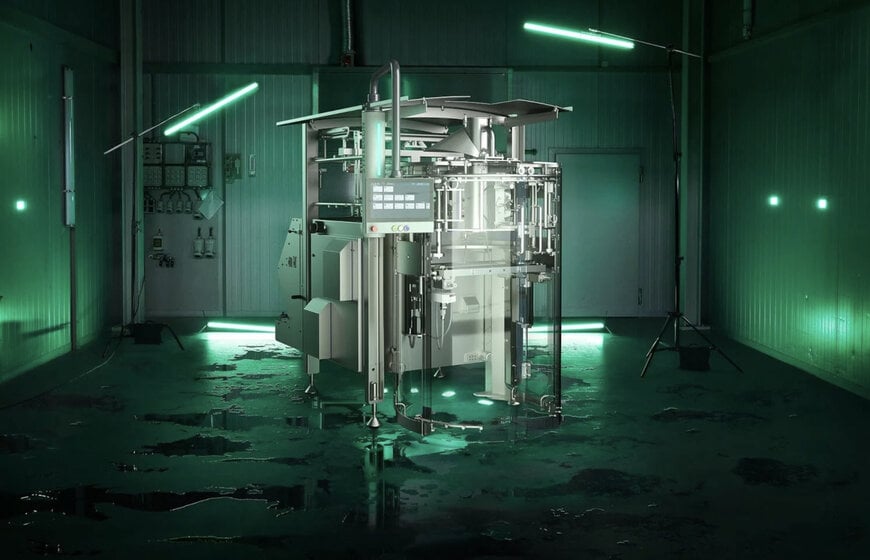
At interpack 2026 in Düsseldorf, Germany (May 7–13, 2026), Syntegon introduced a set of modular automation and packaging technologies designed to improve flexibility, throughput, and regulatory compliance across food and pharmaceutical manufacturing. The portfolio combines robotics, AI-enabled data systems, and lifecycle services to support adaptive, high-efficiency production environments.
Industry drivers shaping factory architectures
Manufacturers in food, pharma, and biotech sectors are facing converging pressures from rising operating costs, shorter product cycles, and stricter regulatory frameworks. These constraints are accelerating the transition toward digitally connected production systems where automation and data integration reduce manual intervention and variability.
Syntegon’s approach focuses on a digital supply chain, where equipment, process data, and lifecycle services are integrated to enable real-time decision-making and improved overall equipment effectiveness (OEE). The concept presented at the event combines automation with centralized, AI-supported operator oversight to maintain process stability while reducing labor dependency.
Automation architecture for flexible food production
A key system introduced targets packaging operations in the food sector, where rapid product variation and sustainability requirements drive demand for flexible equipment. The system architecture integrates real-time data monitoring with automated control interfaces, enabling faster changeovers and reduced downtime.
Operational performance is supported by data-driven optimization of OEE, where production parameters are continuously adjusted based on live inputs. Touchless control interfaces and simplified user interaction reduce training requirements and operator intervention, which is particularly relevant in high-mix production environments.
High-speed packaging with reduced material usage
A vertical packaging platform presented at the event achieves output rates of up to 300 bags per minute, positioning it among high-throughput systems in flexible packaging. The system incorporates patented forming and sealing mechanisms that reduce packaging material consumption by up to 50 percent.
This combination of throughput and material efficiency directly affects cost per unit and sustainability metrics. Additionally, rapid format change capabilities allow manufacturers to switch between bag types with minimal downtime, supporting shorter production runs and greater product variety without compromising productivity.
Robotic filling systems for pharmaceutical compliance
For pharmaceutical and biotech applications, Syntegon introduced a liquid filling system designed to meet increasingly stringent regulatory requirements for sterile injectables. The system eliminates direct human interaction through gloveless isolator technology and fully robotized handling.
A contactless container transport mechanism reduces contamination risk, while automated processes support consistent batch quality. The system also enables up to 50 percent faster changeovers, which is critical for facilities handling multiple drug products or smaller batch sizes typical in biologics manufacturing.
Lifecycle integration and data-driven optimization
Beyond individual machines, the portfolio emphasizes lifecycle services as a core component of factory performance. Engineering, commissioning, maintenance, and upgrades are integrated with AI-based analytics to continuously improve system efficiency and reliability.
This lifecycle approach supports long-term asset performance by enabling predictive maintenance and incremental upgrades, aligning with the broader shift toward connected manufacturing ecosystems. By linking equipment performance data with service interventions, manufacturers can reduce unplanned downtime and extend operational lifespan.
Position within the automation landscape
The technologies presented align with established trends in industrial automation, including modular machine design, robotics integration, and data-centric process control. Comparable systems in the packaging and pharmaceutical sectors are typically evaluated based on throughput, changeover time, contamination control, and material efficiency.
Syntegon’s portfolio differentiates itself through the integration of these parameters within a unified operational framework, combining automation hardware with lifecycle services and data analytics to support scalable and adaptive production systems.
Implications for manufacturing systems
The solutions demonstrated at interpack 2026 reflect a broader transition toward highly automated and interconnected production environments. By combining high-speed equipment, robotics, and AI-supported monitoring, manufacturers can achieve greater flexibility while maintaining compliance and efficiency.
Such systems are increasingly essential for industries where production variability, regulatory oversight, and cost pressures intersect, making integrated automation platforms a critical component of next-generation manufacturing infrastructure.
Edited by an industrial journalist Sucithra Mani with AI assistance.
www.syntegon.com

