
www.medical-devices.tech
09
'26
Written on Modified on
Pressure-relief valve enables stable control in fluidic systems
Bürkert develops a media-separated valve for laboratory and biotech fluid control, supporting pressure stability, contamination prevention and reproducible process conditions.
www.buerkert.de
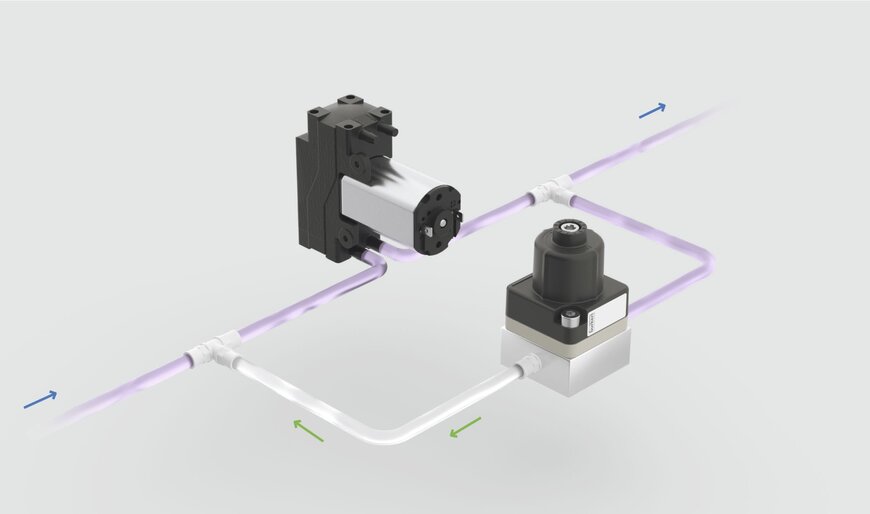
Pressure control is a key requirement in laboratory fluid handling, particularly where sensitive media and precision dosing processes are involved. Bürkert introduced the Type 5550 pressure-relief valve to protect fluidic components while enabling stable pressure regulation in analytical and biotechnology systems.
Pressure stabilisation in laboratory and analytical fluid circuits
Fluidic systems used in analysis platforms, biotechnology and laboratory automation require protection against pressure spikes that can damage sensors, microchannels and dosing components. The Type 5550 valve is designed to relieve pressure automatically when installed in parallel with pressure-sensitive components, limiting pressure peaks through controlled opening of the valve.
In this configuration, the valve contributes to process stability in laboratory automation workflows such as sample preparation, fluid dosing and analytical measurement, where pressure fluctuations can affect repeatability and measurement accuracy.
When installed in series within circulation systems, the valve can also stabilise pressure levels and maintain constant flow conditions. This supports reproducible results in dispensing and sample handling processes by maintaining defined back pressure and returning excess fluid into the circuit.
Maintaining defined process pressure for dosing and measurement
The Type 5550 valve can also be used to maintain constant working pressure by matching system pressure to process requirements. This function supports applications such as measurement systems, dispensing processes and analytical instrumentation that require controlled pressure conditions.
The valve can be integrated upstream in fluid circuits to provide pressure compensation, enabling stable operation of volumetric pumps including diaphragm and gear pumps. By balancing pressure levels independently of flow rate or fluid type, the system supports consistent process conditions across varying operating parameters.
The design also enables recovery of process media during overpressure events by returning discharged liquid into the system. This can reduce media losses in applications involving high-value or limited-volume fluids.
Media separation supports purity requirements
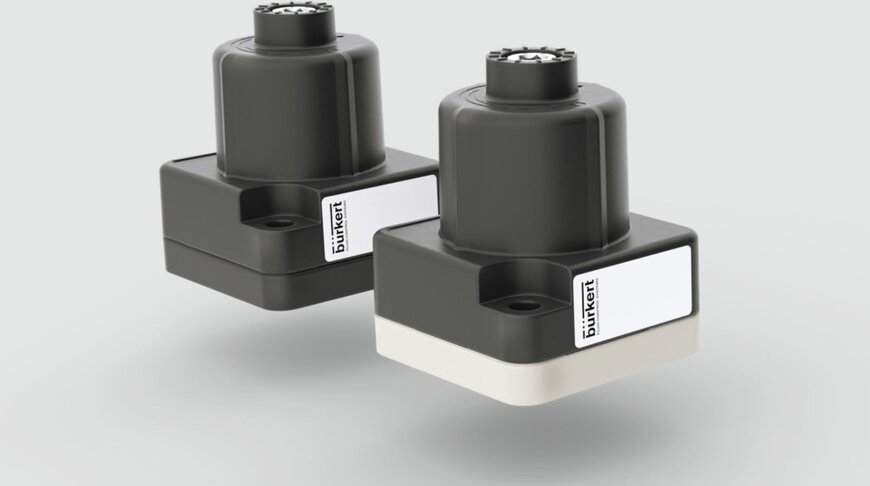
A diaphragm-based separation concept provides full media isolation, reducing contamination risks in applications involving sensitive, reactive or high-purity fluids. This design supports use cases where fluid purity is essential, such as biotechnology processing, analytical chemistry and microfluidic systems.
Material options allow adaptation to different chemical environments. Seals and diaphragms are available in EPDM, FFKM and FKM, while housing materials include PPS and PEEK. A stainless-steel spindle is also part of the design. Variants compliant with USP and FDA requirements are available for regulated environments.
Integration into compact fluid handling assemblies
The valve is designed for direct integration into fluidic layouts without the need for additional tubing or external control units. A compact footprint and flange interface support installation within laboratory equipment or distribution systems, while a surface-mount version is available for microfluidic assemblies.
Following installation, the valve is designed to operate without routine maintenance, supporting long-term use in laboratory and industrial fluid control environments.
Edited by industrial journalist Aishwarya Mambet, with AI-assistance.
www.burkert.com

