
www.medical-devices.tech
07
'26
Written on Modified on
Connected Ophthalmic Workflow and AI-Assisted Surgery Tools
Carl Zeiss Meditec introduces digital, AI, and surgical technologies to improve cataract and refractive workflows across ophthalmology practices.
www.zeiss.com
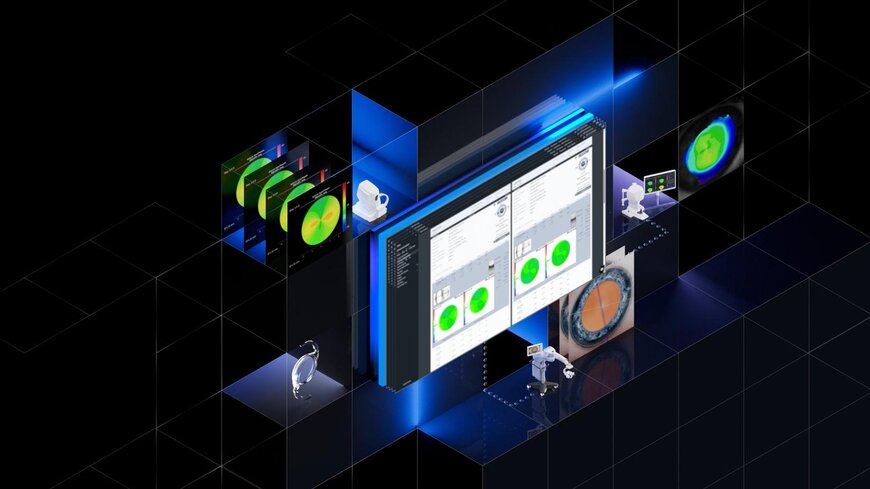
Carl Zeiss Meditec has introduced a set of digital, AI-enabled, and surgical workflow solutions aimed at improving efficiency and clinical outcomes in cataract and refractive procedures. The technologies integrate intraoperative tools, diagnostic systems, and cloud-based software within a connected ophthalmology ecosystem.
Advancing surgical workflow efficiency in cataract procedures
Cataract surgery requires precise intraocular lens (IOL) selection and accurate device handling within constrained surgical environments. The latest updates include new irrigation and aspiration instruments compatible with the DORC EVA NEXUS platform, offering both single-use and reusable configurations to support sustainability and variable incision sizes.
In parallel, diagnostic and planning systems have been enhanced to support more complex surgical scenarios. The updated biometry platform incorporates expanded formula sets, including additional Barrett-based calculations and the Kane method, enabling improved toric IOL selection in anatomically complex cases. These updates also address post-laser vision correction (post-LVC) patients, where altered corneal geometry complicates standard calculations.
The integration of these calculation models into surgical planning software enables preoperative simulation and alignment with intraoperative decision-making, reducing variability in lens positioning and refractive outcomes.
Human-verified AI in patient engagement workflows
The newly introduced patient engagement platform applies a governed AI model to ophthalmology practice workflows. Unlike fully autonomous chatbot systems, the platform uses AI to generate responses that are reviewed by trained clinical personnel before delivery.
This approach combines automated availability with clinical oversight, enabling continuous patient interaction while maintaining communication quality and regulatory compliance. The system captures patient inquiries, guides them toward appropriate procedures such as cataract or refractive surgery, and supports scheduling processes without increasing staffing requirements.
By structuring patient interaction within a controlled AI framework, the platform contributes to a more consistent intake process and improved visibility into patient demand patterns.
Cloud-based collaboration and data integration
A key component of the portfolio is the expansion of cloud-based software solutions designed to reduce fragmentation across ophthalmic care pathways. The browser-based collaboration platform enables secure data sharing between providers, facilitating referrals and coordinated treatment planning.
Built on a centralized health data infrastructure, the system supports interoperability between diagnostic devices, surgical planning tools, and clinical data repositories. This enables continuity of care as patients move between providers, improving coordination across the treatment lifecycle.
In addition, a forthcoming analytics platform is designed to aggregate clinical data at scale, enabling advanced insights into surgical performance, patient outcomes, and workflow optimization. The system is intended to support data-driven decision-making within ophthalmology practices, subject to regulatory clearance.
Integration within a digital ophthalmology ecosystem
The combined portfolio reflects a broader transition toward a digital supply chain in ophthalmology, where diagnostics, surgical planning, intraoperative tools, and post-treatment coordination are interconnected.
By integrating AI-assisted calculations, real-time surgical tools, and cloud-based data platforms, the technologies aim to standardize complex procedures such as cataract and refractive surgery. This integration supports improved procedural consistency, reduced manual coordination, and enhanced patient management across clinical settings.
Industry context and application
The solutions were presented in the context of the American Society of Cataract and Refractive Surgery conference held from April 10–12, 2026, in Washington, D.C., a key forum for advancements in ophthalmic surgery.
Application areas include cataract surgery, refractive procedures, and retinal care, particularly in clinical environments requiring high procedural precision and coordinated multidisciplinary workflows. The technologies are designed for deployment in hospitals, ambulatory surgery centers, and specialized ophthalmology clinics, where integration of imaging, planning, and surgical execution is critical for achieving optimal patient outcomes.
Edited by an industrial journalist Sucithra Mani with AI assistance.
www.zeiss.com

