
www.medical-devices.tech
06
'26
Written on Modified on
Philips Introduces High-Speed CT System for Acute Imaging
The system delivers reconstruction speeds up to 106 images per second and supports high-throughput CT workflows in emergency and trauma imaging.
www.philips.com
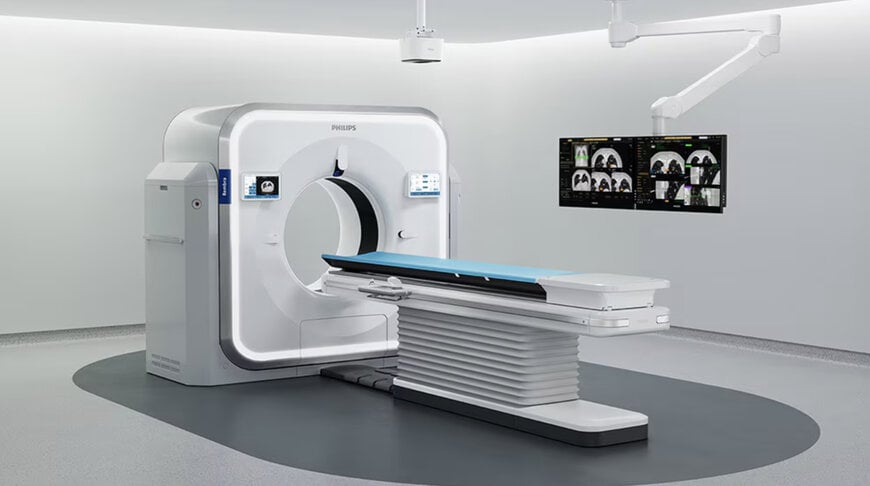
In hospital radiology departments, trauma centers, and emergency care environments, computed tomography systems must deliver rapid image reconstruction, high patient throughput, and reliable diagnostic quality. Royal Philips introduced a new CT imaging platform designed for such high-demand clinical environments. The system is designed to support imaging departments facing increasing patient volumes, complex clinical cases, and growing demand for rapid diagnostic workflows. Its architecture combines high-speed image reconstruction, advanced detector technology, and automated workflows to help clinicians access diagnostic images quickly. The CT platform is CE marked, with U.S. FDA 510(k) clearance pending.
Reconstruction performance for time-critical diagnosis
In emergency imaging, the speed at which reconstructed CT images become available can affect clinical decision-making. The system incorporates an image reconstruction architecture capable of processing up to 106 images per second, enabling clinicians to review imaging results shortly after scanning.
This performance is intended to support rapid assessment in time-sensitive conditions such as stroke, trauma, and acute internal injuries. Faster reconstruction also helps streamline radiology workflows by reducing waiting times between scanning and image interpretation. The system is designed to support up to 270 patient examinations per day, allowing imaging departments to manage increasing demand while maintaining operational efficiency.
Wide bore design for improved patient access
Patient positioning and accessibility are critical factors in CT imaging, particularly in trauma and bariatric cases. The scanner features an 85 cm bore, among the largest in its category, designed to improve access for patients with larger body sizes or complex clinical requirements.
The imaging platform supports a 60 cm standard field of view (sFOV) and an 85 cm extended field of view (eFOV), enabling full anatomical coverage within a single scan. This capability can help reduce the need for repeat scans when imaging larger anatomical areas or complex patient positioning scenarios.
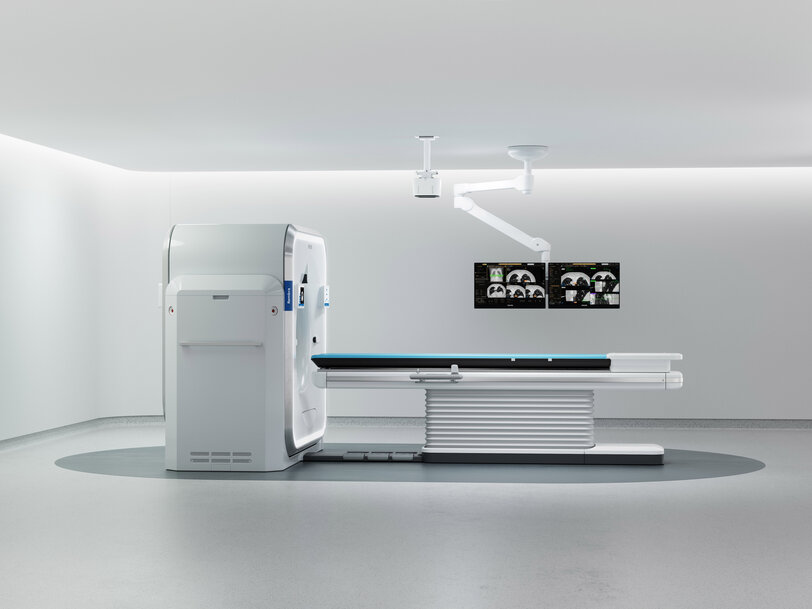
The system also includes a patient table supporting a scan range of up to 2.3 meters and a gantry-to-table clearance of 46 cm, providing flexibility for positioning during diagnostic and interventional imaging procedures.
Detector technology for high-resolution imaging
At the core of the CT system is a high-density detector architecture designed to support dose-efficient imaging while maintaining high spatial resolution. The detector provides an in-plane spatial resolution of 23 line pairs per centimeter, allowing visualization of anatomical structures as small as 0.25 mm.
A two-dimensional anti-scatter grid reduces scattered radiation, helping maintain image clarity even when scanning patients with larger body sizes or complex anatomical conditions. Such features contribute to consistent image quality across different clinical scenarios.
AI-enabled workflows for clinical productivity
The system integrates AI-based workflow functions designed to automate routine imaging steps and reduce manual interaction during scanning procedures. Automated positioning, protocol selection, and workflow assistance features help improve consistency and reduce examination time.
Such automation can help imaging departments maintain throughput in high-demand environments while allowing radiology staff to focus on diagnostic interpretation and patient care.
System design for long-term hospital operation
Healthcare imaging equipment must maintain reliable operation over extended periods. The CT platform is designed for operation at altitudes of up to 5000 meters, allowing deployment in a wide range of geographic locations.
The system is engineered for a lifecycle of up to 20 years, provided that regular maintenance and upgrades are performed. A service program covering CT tube replacement for up to 10 years is also available, helping healthcare organizations plan operational costs more predictably.
www.philips.com

