
Pharmaceutical Automation Connects Digital Systems
AutomaPlus 2026 in Zurich examined how digital integration across pharmaceutical development, manufacturing, intralogistics and commercial operations can address data transfer, production analytics and automation challenges.
automa.plus
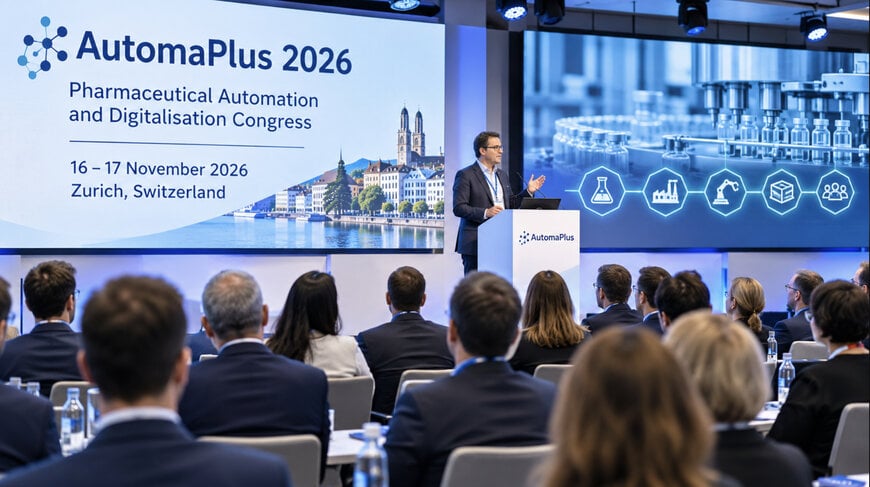
The Pharmaceutical Automation and Digitalisation Congress (AutomaPlus) took place in Zurich, Switzerland, on 16–17 November 2026. Presentations from Novartis, Bachem, AGILOX and Eli Lilly examined practical approaches to connecting pharmaceutical operations, from transferring development knowledge into manufacturing to deploying autonomous robots and adapting digital engagement to regulated markets.
Connecting Development and Manufacturing Data
Adam Bagosi, Associate Director Applied Automation and Digitalisation at Novartis, addressed the gap between knowledge generated during pharmaceutical development and the information available to manufacturing teams. He described an additional digital layer designed to connect stages of the product lifecycle. The approach aims to improve knowledge transfer between research and development (R&D) and production, helping manufacturing teams access information accumulated during earlier development stages.
Digital Infrastructure for Peptide Manufacturing
Sonja Peter, Global MES Innovation Lead at Bachem, presented the digital infrastructure of the company's large-scale peptide production site. Enterprise resource planning (ERP), manufacturing execution systems (MES), distributed control systems (DCS) and historians operate within a connected architecture.
The presentation covered equipment signal and event classification, the identification of recurring deviations and the use of analytics for root-cause analysis. These methods support the detection of potential process issues and provide manufacturing teams with structured operational data for troubleshooting and process monitoring.
Autonomous Robots in Pharmaceutical Intralogistics
Gerald Kiener, Global Business Development Executive at AGILOX Services GmbH, outlined an intralogistics automation project involving 40 autonomous mobile robots (AMRs), approximately 500 stations and 200 gates across two levels of a pharmaceutical production site.
The system is designed to move different load types while operating alongside personnel and forklifts, interfacing with conveyors and connecting to existing warehouse management and production systems. The project was in preparation for commissioning, with integration, site coordination and operational readiness among the challenges discussed.
Digital Engagement in Regulated Pharmaceutical Markets
Juan Gemmato, Omnichannel Digital Execution Lead at Eli Lilly, presented a UK case study on adapting global omnichannel marketing strategies to local regulatory and market conditions. The presentation examined how digital engagement across audiences, including healthcare professionals, requires alignment between global strategy, local execution and regulatory requirements.
Integration Across the Pharmaceutical Value Chain
The presentations highlighted digital integration challenges at interfaces between development, manufacturing, automation, logistics and commercial operations. Data transfer between lifecycle stages, interoperability between industrial systems, coordination of autonomous transport and localisation of digital engagement strategies all require alignment between technologies, processes and organisational functions.
Alejandro Rodriguez of Peptide Dynamics summarised the industry's longer-term direction: "By 2030 the pharmaceutical industry will show huge gaps between those who adopt digital solutions and those who don't. It will focus on personalised medicine and be highly automated."
The next AutomaPlus congress is scheduled for 15–16 November 2027 in Zurich, Switzerland. The call for speakers and early registration are available at Automa plus
Edited by Sucithra Mani, Induportals editor – adapted by AI
www.automa.plus.com

