
www.medical-devices.tech
27
'26
Written on Modified on
ADC Fill-Finish Lines: Reducing Product Loss in Filling
Syntegon combines MaxPro dosing, containment, freeze-drying and handling technology in integrated lines that raise yield of costly antibody-drug conjugate vial batches.
www.syntegon.com
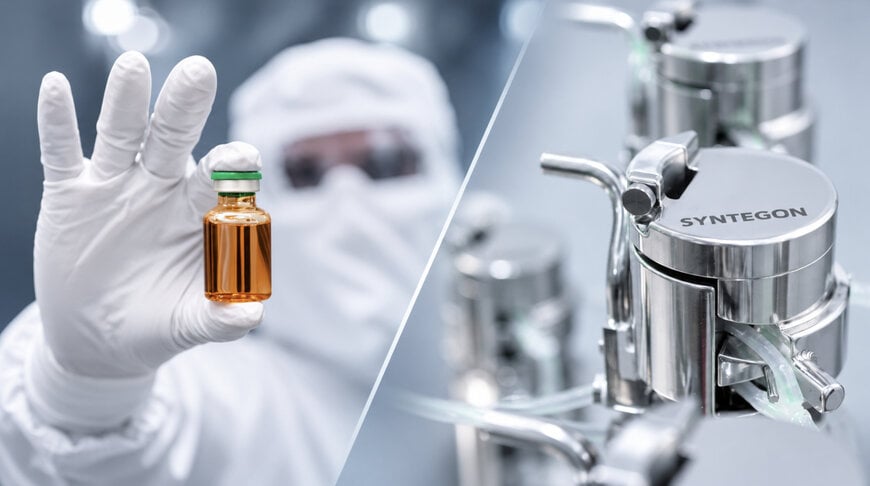
Antibody-drug conjugates (ADCs) are among the most cost-intensive pharmaceutical products, so every vial lost during fill-finish directly reduces the return on a long development and manufacturing chain. Syntegon addresses this yield challenge for pharmaceutical and biotech manufacturers and contract development and manufacturing organizations (CDMOs) with integrated filling, handling and freeze-drying lines for highly potent drug products.
Why Yield Matters in ADC Production
Before filling starts, the active substance has already passed through multiple development and manufacturing steps, and the final drug product is in many cases lyophilized to support stability and shelf life. Even small losses therefore have a significant economic impact. The objective is to convert as much of the available product as possible into correctly filled vials.
Precise Dosing and In-Process Control
Product loss can occur throughout the filling process. Small deviations in fill weight can become a considerable economic problem: underfilled containers may need to be rejected, while overfilling consumes more of the valuable product than necessary. Syntegon’s MaxPro dosing and filling technologies rely on continuous in-process control to keep filling on target. Precise weighing and filling during start-up and at the end of the production cycle increase the number of correctly filled containers and make full use of the product. Automatic detection and correction of underfilled containers further supports an efficient production flow and limits product loss. These options are best considered and integrated during the planning stage of a new line, while existing equipment can often be upgraded later to improve performance and process safety.
Protecting Product Before and After Filling
Upstream and downstream steps also affect yield. The transfer of product from formulation equipment to the filling machine, and of filled vials to lyophilization, washdown and capping, requires attention. Automated, tool-less changeovers, gentle transport systems and automated loading and unloading equipment for the freeze-dryer make operations safer for products and people and can boost yields significantly. Cleanability must also be designed into the line from the beginning, so that no highly potent residues remain in the process zone after each batch. A combination of external cleaning and washdown of all non-removable components is a proven approach and should be assessed during the mock-up phase of a new line.
Line Portfolio for Highly Potent Drugs
Syntegon’s portfolio for ADC lines comprises RRU cleaning machines, HQL sterilization tunnels, ALF vial filling machines with MaxPro features, toxic isolators, Lyomega freeze-dryers, VRK crimping machines and RAN external cleaning machines. Optional automated pre-use post-sterilization integrity testing (PUPSIT), an optional settle plate changer, and after-sales services and upgrades complete the offer.
Single-Source Line Integration
For highly valuable drug products, every interface matters. Designing the line as one coherent process reduces interfaces, coordinates process steps and limits project complexity from the outset. Syntegon combines pooling, vial filling, handling, freeze-drying and downstream technologies in complete line solutions from a single source, which can reduce project risk while supporting consistent product quality and efficient use of ADC batches throughout the lifecycle of the line. According to the company, 2025 was a record year for its pharma business, driven among other factors by an order for eight filling lines for highly potent vials from customers in China.
Additional Context
This section details technical specifications and competitive benchmarking not included in the original product announcement.
The revised EU GMP Annex 1 for the manufacture of sterile medicinal products, published in 2022 and in operation since 25 August 2023, centers on a contamination control strategy and addresses pre-use post-sterilization integrity testing of sterilizing filters. It also favors barrier technologies such as isolators to reduce human intervention in aseptic processing. These requirements explain why isolator-based containment, integrity testing and automated handling are integral parts of fill-finish lines for highly potent products.
Edited by Sucithra Mani, Induportals editor – adapted by AI.
www.syntegon.com

