
www.medical-devices.tech
29
'26
Written on Modified on
Advanced Transjugular Intrahepatic Shunt Engineering for Portal Hypertension
BD launched the Liverty TIPS Stent Graft in the U.S. to give physicians flexible, patient-specific shunt solutions.
www.bd.com
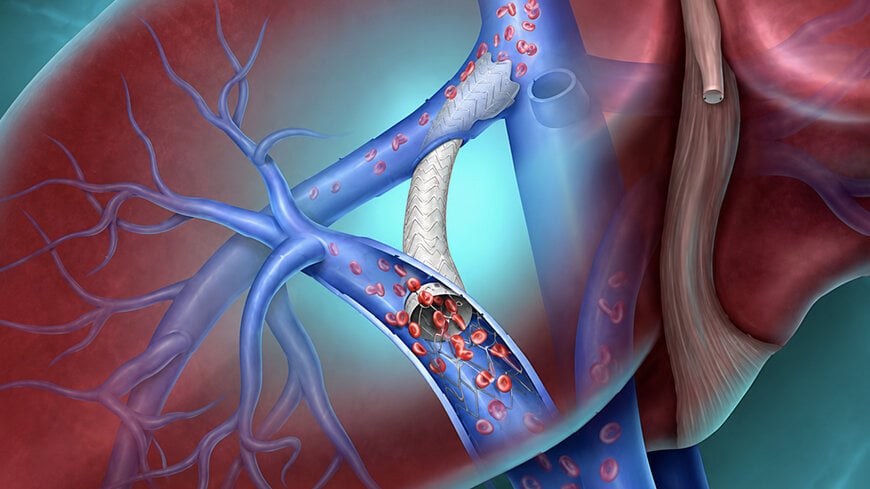
Portal hypertension resulting from chronic liver disease creates severe hemodynamic complications, including variceal bleeding and refractory ascites, by increasing resistance to portal venous blood flow. Managing these pathological pressures requires precise therapeutic shunting between the portal venous system and the hepatic veins via minimally invasive interventions. Traditional stent graft options have often lacked the anatomical adaptability required to fine-tune portosystemic pressure gradients for individual patients, presenting procedural control challenges in complex liver anatomies.
To address these hemodynamic optimization challenges in vascular interventions, BD has announced the U.S. commercial launch of the BD Liverty TIPS Stent Graft. The system advances portal hypertension care by providing interventional radiologists and vascular specialists with enhanced deployment accuracy and the flexibility to tailor shunt configurations to patient-specific anatomy and disease progression.
System Architecture and Operating Mechanism
The BD Liverty TIPS Stent Graft features an engineered, self-expanding nitinol frame coupled with an expanded polytetrafluoroethylene encapsulated graft. The blood-contacting inner surface of the encapsulated segment is carbon-impregnated to optimize hemocompatibility. The endoprosthesis design incorporates a 2 cm long bare metal portal segment alongside covered stent lengths ranging from 4 cm to 10 cm, representing the longest commercially available lengths in the sector.
The system utilizes an expandable diameter design ranging from 6 mm to 10 mm. This variability allows operators to address patient-specific hemodynamic profiles and control portal pressure gradients precisely. The device is deployed via a fully sheathed, tri-axial delivery system engineered for stability, control, and sheath-less tracking through the liver parenchyma. Highly visible radiopaque markers and a distinct marker band are integrated to facilitate accurate positioning under fluoroscopic guidance.
Clinical Evaluation and Performance Data
The U.S. commercial introduction of the device follows established clinical use in Europe and is backed by data from the ARCH clinical study. The prospective, multi-center study evaluated 177 patients across 26 clinical sites to establish the safety and effectiveness of the device. Interim results from the trial indicate high technical and hemodynamic success rates, providing clinical outcomes for small-diameter shunt configurations designed to balance pressure relief with the mitigation of hepatic encephalopathy risks.
Additional Context:
This section details technical specifications and competitive benchmarking not included in the original product announcement.
The clinical management of portal hypertension through transjugular intrahepatic portosystemic shunts relies heavily on balancing portal pressure reduction against the onset of post-procedural hepatic encephalopathy. Historically, fixed-diameter or narrow-range stent grafts limited an operator's ability to titrate blood flow accurately through the hepatic parenchyma. Smaller-diameter shunts have gained recognition in clinical guidelines for reducing the incidence of hepatic encephalopathy compared to conventional 10 mm shunts, though they require high dimensional stability and precise deployment mechanisms to prevent occlusion or early shunt dysfunction.
When evaluated against conventional TIPS portfolios, the BD Liverty system extends maximum available covered lengths to 10 cm, accommodating extensive parenchymal tracts that shorter legacy devices struggle to line completely. Compliance with ISO 10993-1 standards for biological evaluation and rigorous mechanical testing under regulatory pre-market approval protocols verify the chronic outward force, radial resistive force, and fatigue resistance of the nitinol-ePTFE composite over extended functional lifetimes.
Edited by Sucithra Mani, Induportals editor – adapted by AI.
www.bd.com

