
www.medical-devices.tech
26
'26
Written on Modified on
Pulsed Field Ablation Catheter Systems Performance
Johnson & Johnson clinical evaluations show VARIPULSE Pro achieved 100 percent acute procedural success across 19 European electrophysiology centers.
www.jnjmedtech.com
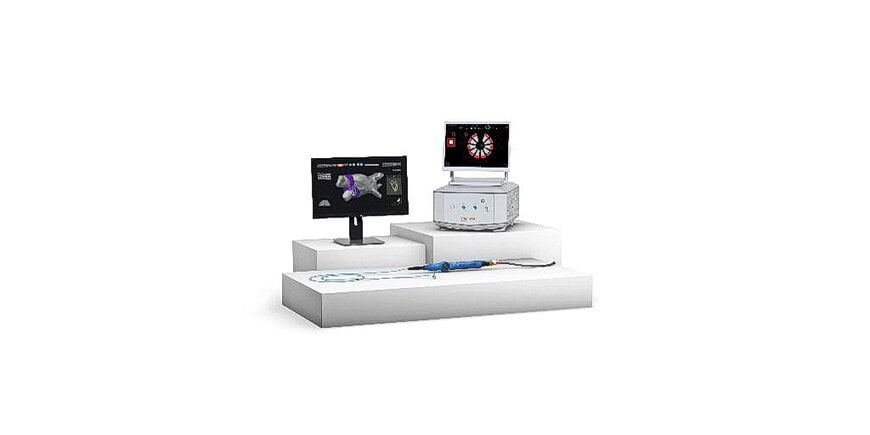
Medical centers across Europe evaluated pulsed field ablation technology developed by Johnson & Johnson to treat paroxysmal and persistent atrial fibrillation. The clinical implementations paired cardiac electrophysiology catheters with advanced electroanatomical mapping infrastructure to optimize cardiac tissue isolation and operational workflows.
Technical Architecture and Operational Mechanism
Pulsed field ablation utilizes non-thermal irreversible electroporation to create targeted myocardial lesions while sparing adjacent structural tissue. The VARIPULSE Pro platform applies a 3.8-second ablation pulse sequence designed for integrated cardiac mapping and pulmonary vein isolation.
The investigational OMNYPULSE platform integrates a large-tip focal catheter design with contact-force sensing mechanisms. This structural configuration provides real-time biomechanical feedback to maintain tissue apposition, delivering microsecond electrical fields that destabilize cell membrane potentials without thermal convective injury.
Multicenter Implementation and Verification
Clinical integration took place across specialized cardiology institutions, including Herzzentrum Bad Segeberg in Germany and OLV Hospital Aalst in Belgium. Participating electrophysiologists executed single-catheter procedures to assess workflow consolidation across catheterization laboratories.
In the VARIPURE multicenter registry across 19 facilities, 225 patients underwent treatment with the VARIPULSE Pro platform. The system yielded a 100 percent acute procedural success rate with a mean ablation duration of 17.9 minutes. Electroanatomical tracking enabled single-catheter mapping and ablation in 88.9 percent of cases, eliminating catheter exchange cycles. The reported primary adverse event rate stood at 0.4 percent, with zero instances of coronary spasm, stroke, acute kidney injury, or death.
Long-Term Efficacy and Mapping Integration
The Omny-IRE multicenter trial tracked 136 symptomatic paroxysmal atrial fibrillation patients over a 12-month period across 13 European centers. Catheter deployment with the OMNYPULSE system achieved 82.5 percent freedom from documented atrial arrhythmia recurrence under continuous monitoring parameters and 90.1 percent freedom under standard-of-care protocols. The associated safety profile showed a 2.9 percent resolved adverse event rate alongside a 25.5-point mean improvement in functional quality-of-life scores.
Regarding the engineering transition from acute isolation to sustained rhythm control, Tom De Potter, M.D., Head of Electrophysiology at OLV Hospital, stated that "sustained effectiveness at 12 months is a key measure of whether strong acute results translate into meaningful outcomes over time."
Interoperability data from over 1,000 healthcare facilities comparing the CARTO 3 electroanatomical mapping environment against the EnSite mapping architecture demonstrated that integrated electrophysiology workflows reduce follow-up clinical utilization. Patients mapped using alternative systems experienced a 31 percent higher relative risk of arrhythmia-related inpatient readmissions or emergency interventions at 12 months.
Edited by Evgeny Churilov, Induportals Media - Adapted by AI.
www.jnjmedtech.com

