
www.medical-devices.tech
03
'26
Written on Modified on
Endoscopic Vessel Harvesting System Advances CABG Procedures
Getinge introduces a next-generation vessel harvesting platform designed to improve workflow efficiency, visualization and clinician ergonomics during coronary bypass surgery.
www.getinge.com
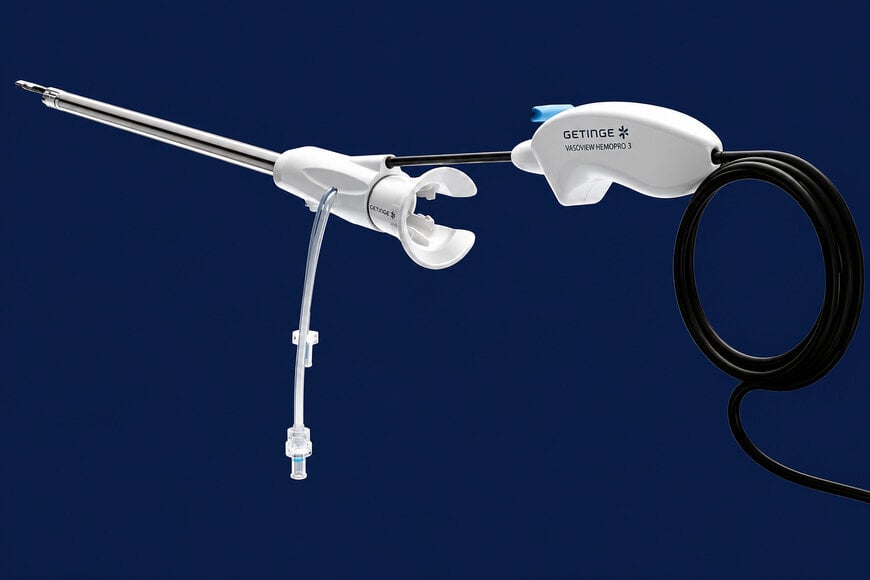
Getinge has launched the Vasoview Hemopro 3 Endoscopic Vessel Harvesting (EVH) System, a new minimally invasive surgical platform developed for vessel procurement during coronary artery bypass grafting (CABG). The system combines ergonomic enhancements, improved energy delivery, simplified connectivity and workflow-focused design features intended to support conduit quality and procedural consistency in cardiovascular surgery. The initial commercial rollout has begun in the United States, with international expansion planned following regulatory approvals.
Minimally Invasive Vessel Harvesting in Coronary Revascularization
Endoscopic vessel harvesting is widely used to obtain blood vessels, including the saphenous vein and radial artery, for coronary bypass procedures. Compared with traditional open vessel harvesting techniques, EVH has been associated with lower wound complication rates, reduced postoperative pain, faster patient recovery and improved cosmetic outcomes. Conduit quality remains a critical factor in CABG success, making vessel harvesting technology an important component of cardiovascular surgical workflows.
As cardiovascular centers continue to focus on procedural efficiency and patient outcomes, demand has increased for technologies that support consistent vessel harvesting while reducing surgical trauma and workflow complexity.
Clinician-Driven Design Improvements
The new system was developed using feedback from more than 100 vessel harvesting specialists worldwide. According to Getinge, the redesign focused on four primary areas: ergonomics, energy control, visualization and workflow efficiency.
A redesigned harvesting tool incorporates a game-controller-style handle intended to improve user comfort during procedures. The soft-touch activation control can be operated with minimal force and from multiple hand positions, helping reduce hand fatigue while maintaining instrument control throughout vessel harvesting procedures.
These ergonomic considerations are particularly relevant because EVH procedures require precise manipulation over extended periods, where operator comfort can influence procedural consistency.
Integrated Power Delivery and Simplified Connectivity
One of the most significant workflow changes is the introduction of an integrated harvesting tool power cable. The design enables a one-click connection between the harvesting instrument and the dedicated power supply, eliminating the need for separate extension cables and associated sterilization processes.
The dedicated power supply is designed to deliver consistent energy output for cutting and cauterization functions. Stable energy control is important during vessel harvesting because excessive thermal spread may affect conduit integrity, while insufficient energy delivery can compromise procedural efficiency.
The integrated architecture also reduces the number of system components that require preparation before surgery, potentially contributing to shorter setup times and streamlined operating room workflows.
Visualization and Procedural Efficiency Enhancements
Maintaining clear visibility during endoscopic vessel harvesting is essential for preserving vessel quality and avoiding procedural complications. The new system incorporates design features intended to support consistent visualization and workflow continuity throughout the procedure.
Previous development information released by Getinge indicated enhancements in smoke evacuation and regulated energy control, both of which contribute to maintaining a clear surgical field during electrosurgical vessel harvesting.
By integrating these functions into a unified platform, the system aims to improve procedural efficiency while supporting standardized harvesting techniques across different clinical environments.
Supporting Contemporary Cardiovascular Surgery
CABG remains one of the most frequently performed cardiac surgical procedures worldwide. As patient populations age and cardiovascular disease prevalence remains high, healthcare systems continue to seek technologies that improve procedural reproducibility while supporting enhanced patient recovery.
The latest EVH platform reflects broader trends in minimally invasive cardiovascular surgery, where device manufacturers increasingly focus on reducing surgical trauma, improving workflow standardization and enhancing clinician usability. The continued availability of the previous-generation system alongside the new platform allows healthcare providers to adopt new technology according to institutional requirements and training schedules.
Additional Context: This section details technical specifications and competitive benchmarking not included in the original product announcement
The endoscopic vessel harvesting market is dominated by a limited number of specialized manufacturers, including Getinge and Terumo, with additional technology development involving companies such as Saphena Medical and KARL STORZ.
Competitive benchmarking in EVH systems typically focuses on several measurable characteristics: conduit preservation, thermal spread control, smoke evacuation performance, ergonomics, energy regulation, visualization quality and workflow efficiency. Because harvested vessel quality directly affects CABG outcomes, manufacturers increasingly emphasize technologies that minimize thermal injury while maintaining effective branch sealing and dissection performance.
Compared with earlier EVH platforms, the new system introduces an integrated cable architecture, revised ergonomic controls and a dedicated power supply. Competing systems, including Terumo’s VirtuoSaph platform, similarly emphasize energy control, smoke management and minimally invasive vessel handling. Recent industry developments have focused on improving surgeon ergonomics and procedural standardization rather than fundamentally changing the harvesting technique itself.
Industry guidelines from organizations including ISMICS, EACTS, ACC and AHA support the use of endoscopic harvesting techniques, particularly for reducing wound complications associated with traditional open harvesting methods. As a result, future competition in the EVH segment is expected to center on usability improvements, procedural efficiency and technologies that support consistent conduit quality across different surgical teams.
Edited by Sucithra Mani, Induportals editor – adapted by AI.
www.getinge.com

