
IEEE 11073 SDC Evaluation Framework for Medical Device Integration
Vector provides an embedded software stack and simulation capabilities to benchmark bidirectional data exchange and test interoperability in clinical environments.
www.vector.com
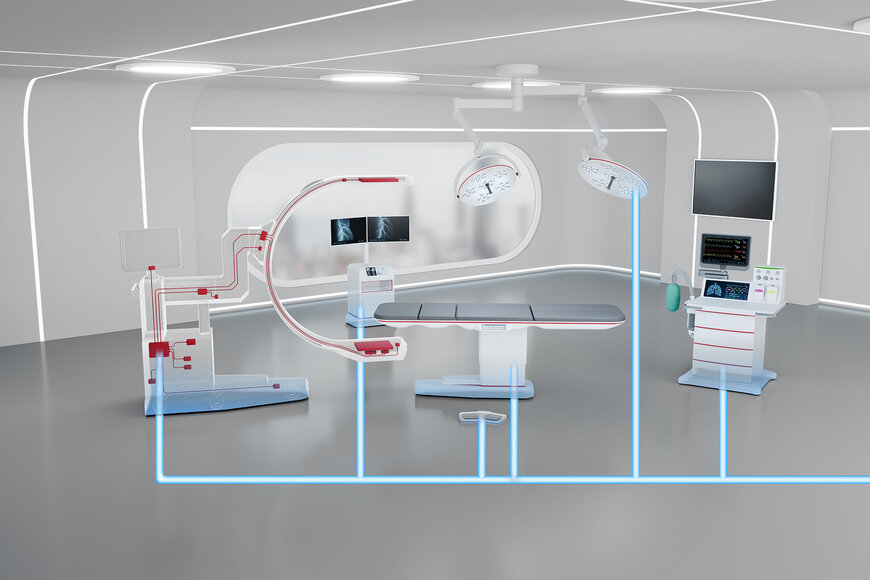
The medical technology sector requires standardized communication protocols to enable interoperability across various clinical environments. To support this requirement, Vector has introduced an evaluation framework for the Service-oriented Device Connectivity (SDC) standard. This toolset is designed for medical device manufacturers to analyze the IEEE 11073 SDC standard, benchmark system performance, and evaluate features using Software-in-the-Loop (SIL) and Hardware-in-the-Loop (HIL) testing configurations.
Bidirectional Data Exchange in Clinical Workspaces
The IEEE 11073 SDC standard facilitates the bidirectional exchange of data and services among medical devices. This capability is applied in demanding clinical scenarios, including operating rooms, emergency departments, and intensive care units, where synchronized device communication supports clinical operations and automated workflows. The evaluation bundle provides system architects and software engineering teams with an embedded software stack and simulation tools to test integration into series products.
Regulatory Compliance and Interoperability Testing
Implementing complex communication interfaces requires adherence to strict industry standards. The SDC software stack provided by Vector is aligned with core regulatory requirements, including the IEEE 11073 standards family. Furthermore, the architecture complies with IEC 62304 up to Safety Class C for medical device software life cycle processes, as well as IEC 62443-4-1 for cybersecurity requirements. For series production licensing, the framework includes documentation intended to support regulatory approval processes up to Class IIb under the European Medical Device Regulation (EU MDR). By utilizing this framework, manufacturers can develop an initial proof of concept, reducing the engineering overhead typically associated with in-house protocol development.
Industrial Collaboration and Standardization
Standardization of device networking remains an ongoing focus in the medical technology industry. Vector participates in the advancement of the IEEE 11073 SDC standard through its membership in OR.NET, an organization focused on secure and dynamic integration in the operating room. This involvement supports the translation of interoperable device architectures into deployed clinical systems.
Additional Context: This section details technical specifications and competitive benchmarking not included in the original product announcement.
The market for IEEE 11073 SDC implementation includes both commercial software stacks and open-source alternatives, such as openSDC and the SDCLib libraries. Open-source implementations provide accessible entry points for academic research and early-stage prototyping; however, they frequently lack the formal certification artifacts required for medical device regulatory clearance. Commercial solutions typically differentiate themselves by providing IEC 62304-compliant documentation, IEC 62443 cybersecurity lifecycle integration, and professional technical support. Benchmarking these stacks involves evaluating memory footprint, latency in real-time bidirectional communication, and the availability of surrounding testing ecosystems. Comprehensive SIL and HIL simulation tools are critical parameters for evaluating these stacks, as they allow engineers to validate complex clinical network scenarios before target hardware becomes available.
Edited by an industrial journalist, Lekshman Ramdas, with AI assistance.
www.vector.com

