
www.medical-devices.tech
26
'25
Written on Modified on
AI Virtual Twins for Alzheimer’s Care
Dassault Systèmes presents an immersive AI-driven virtual twin experience at CES 2026, highlighting new approaches to dementia and Alzheimer’s research, diagnosis, and care.
www.3ds.com
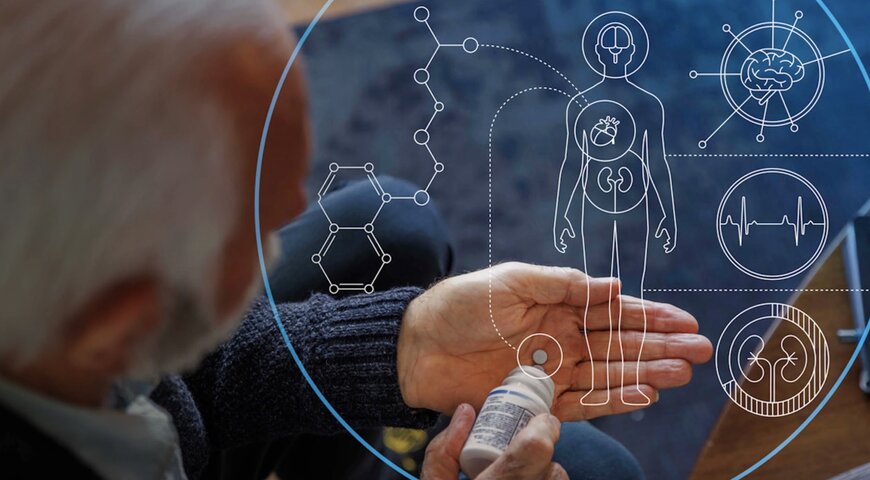
At CES 2026 in Las Vegas, Dassault Systèmes demonstrates how artificial intelligence combined with patient-specific virtual twins could reshape future dementia and Alzheimer’s care, moving key elements of research, diagnostics, and treatment into continuously updated digital environments.
From virtual human vision to applied healthcare
Building on its recent Virtual Human Twin Experience Symposium, Dassault Systèmes positions virtual twins as a foundational element of future healthcare systems. The company’s approach is based on its 3D UNIV+RSES platform, which integrates AI, real-time sensing, and patient data to create dynamic digital representations of human biology.
At CES, this concept will be presented through a first-of-its-kind experience focused specifically on degenerative neurobiology, addressing the growing clinical and societal challenges posed by dementia and Alzheimer’s disease.
AI as a healthcare operating system
Within the 3D UNIV+RSES environment, AI acts as the central mechanism enabling the virtualization of traditionally physical processes such as clinical trials, diagnostics, and treatment pathways. A patient’s virtual twin is initialized using digital health records and continuously updated through sensor data.
This architecture is intended to support earlier prediction of health changes, proactive risk mitigation in home environments, and the identification of patterns that may not be visible through conventional clinical observation. By shifting analysis and testing into a living virtual model, Dassault Systèmes aims to enable more personalized and predictive care strategies.
Implications for research and clinical development
The company’s broader virtual human modeling efforts already span multiple organs, including the brain, heart, and liver, supported by collaborations with academic institutions, regulators, medical organizations, and industry partners. At CES, Dassault Systèmes will also highlight how its MEDIDATA solutions are being used to redefine clinical trials through data virtualization and advanced analytics.
Together, these technologies are positioned as steps toward a fully interoperable virtual human framework, where AI-driven models are trusted, explainable, and connected across the healthcare ecosystem.
Toward interoperable, AI-enabled medicine
By presenting Alzheimer’s care as a use case for AI-powered virtual twins, Dassault Systèmes emphasizes a shift from episodic, location-bound healthcare to continuously adaptive digital systems. The CES 2026 showcase underscores the company’s ambition to accelerate medical innovation, improve precision in care, and integrate virtual and real-world data into a unified, patient-centered healthcare operating system.
www.3ds.com

