
www.medical-devices.tech
26
'26
Written on Modified on
New Glucose Sensors Spot Dangerous Lows and Ketones Sooner
Senseonics, Dexcom and Abbott are building sensors that last longer and alert users sooner to falling blood sugar and rising ketones.
induportals-media-publishing.com
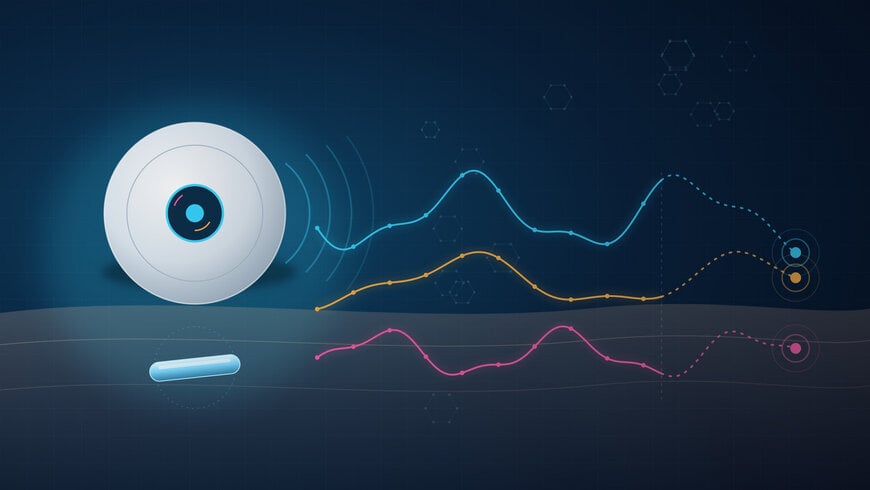
Continuous glucose monitoring has changed diabetes care, but it still has blind spots. Glucose in interstitial fluid lags behind blood glucose by several minutes, so a reading can look safe while levels are already falling. Overnight lows can go unnoticed, and diabetic ketoacidosis often develops unseen. Hospital admissions for ketoacidosis have risen about 55 percent in a decade, yet only 18 percent of people with type 1 diabetes keep a blood ketone meter at home.
How Predictive and Multi-Analyte Sensing Works
Most wearable CGMs, including Dexcom's G7 and Abbott's FreeStyle Libre, use enzyme-based electrochemical sensing in interstitial fluid. Users apply them themselves and replace them every 10 to 15 days. Senseonics instead uses a sensor that a healthcare provider implants under the skin. Inside it, glucose binds reversibly to a fluorescent indicator, which allows one-year wear with weekly calibration. Multi-analyte devices add further chemistries to a single sensor. Abbott's Libre Duo measures glucose and ketones every minute, reducing reliance on separate fingerstick or urine tests.
Predictive algorithms extrapolate trend and rate-of-change data to warn users before a threshold is crossed, giving them time to act despite the lag. Each format has its own benefits: self-applied sensors can be started at home, while long-term implants mean fewer sensor changes.
Barriers to Reliable Alerts
An alert is only as good as the reading behind it. Sensor drift and calibration error carry straight into every forecast, so accuracy has to hold across the full wear period, not just the first few days. Interstitial lag limits how early any sensor can respond, and each added analyte multiplies the validation work needed before clinicians and users can rely on the alarm.
How Developers Are Tackling the Gaps
Senseonics targets drift and frequent sensor changes. Its Eversense 365, on the US market since 2024 and CE marked in January 2026, lasts one year and provides predictive alerts for upcoming low glucose. Real-world data from the first 12,360 sensors among open-loop users showed more than 81 percent of users meeting hypoglycaemia targets, with comparable results in the first and second six-month periods. In November 2026, Senseonics and Beta Bionics launched the integration of the sensor with the iLet Bionic Pancreas automated insulin delivery system.
Dexcom focuses on lag and clinical data integration. The G7 15 Day, already on the market, offers up to 15.5 days of wear, and its Urgent Low Soon alert warns users when glucose is predicted to fall to 55 mg/dL or below within 20 minutes. Dexcom also offers direct integration with health systems' Epic electronic health records. In July 2026, the FDA named Dexcom the first participant in its TEMPO digital health pilot, where the company plans to use G7 and Stelo data in an AI-powered programme intended as an aid in screening for prediabetes and type 2 diabetes.
Abbott addresses ketoacidosis. Libre Duo, the first dual glucose-ketone sensor, was CE marked in May 2026, and its 10-day version was authorised by the FDA in August, with a US launch planned for December. Existing FreeStyle Libre sensors already illustrate what continuous alarms can achieve in care settings: in a pilot with North Tees and Hartlepool NHS Foundation Trust, FreeStyle Libre 2 sensors in Hartlepool care homes cut the number of days residents spent in hospital for diabetes-related admissions from 235 to four.
Where Does CGM Go Next?
Dexcom's G8, designed to be around 50 percent smaller than G7 and to adapt to physiological variability in real time, could launch in late 2027 or early 2028, with multi-analyte versions planned to follow. Senseonics has begun first-in-human trials of Freedom, a CGM designed to work with no on-body transmitter, while Abbott is moving into clinical trials of a continuous lactate sensor.
Taken together, these developments tackle the blind spots of continuous glucose monitoring from different directions. Longer wear and stable accuracy reduce gaps in monitoring, earlier low-glucose forecasts give users more time to act on falling levels, and continuous ketone readings bring ketoacidosis risk into the same view as glucose. The role of the sensor is also widening: as data flows into health records and automated insulin delivery systems, alerts can inform treatment decisions rather than simply warn the wearer. The challenge for the next generation will be keeping alarms accurate and meaningful as sensors measure more, so that users trust them rather than tune them out. Progress across the field will increasingly centre on how reliably algorithms turn multiple signals into timely, trustworthy alerts.
Edited by Natania Lyngdoh, Induportals editor, with AI assistance.
www.medical-devices.tech

